Restrooms That Match the Brand
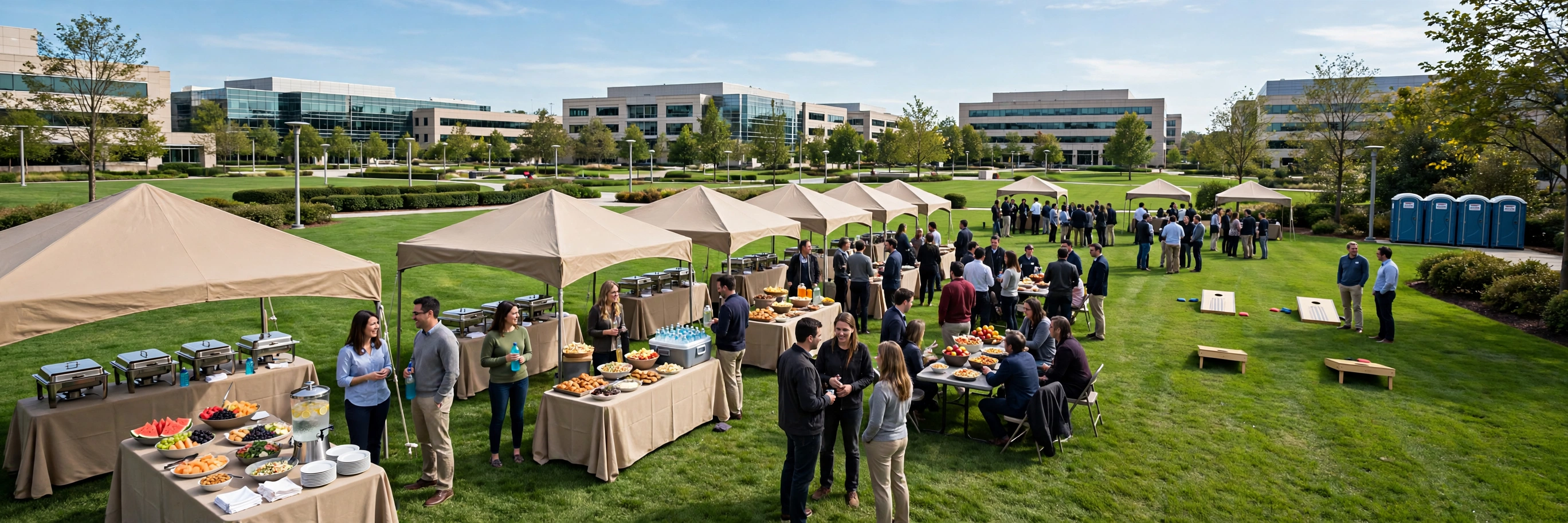
A grand opening with a ribbon cutting and a row of standard portable toilets in the background sends a mixed message. Corporate event restroom rental is about alignment: facilities that match the polish of everything else you have invested in — the tent, the catering, the signage, the guest list.
The audience is different from a festival crowd. Executives, clients, donors, media, elected officials — people who notice details and talk about them afterward. The restroom experience at a corporate event is hospitality, not logistics. Plan it like hospitality and it disappears into the event. Plan it like an afterthought and it becomes the thing people mention on the drive home.
We work with corporate planners, marketing teams, dealerships, developers, and municipalities across 48 contiguous states. One call to (855) 343-0136 and we will spec the right tier for your event, your guest list, and your venue's reality.
Who Books Corporate Sanitation
Corporate event planners running product launches, company celebrations, all-hands gatherings, and holiday parties. Car dealerships hosting grand openings and sales events. Developers and builders opening model homes and new communities. Municipalities and chambers of commerce hosting groundbreakings and ribbon cuttings. Film and production companies on location shoots.
The common thread: the guest list includes people the host is trying to impress, and the event is an extension of the brand. Restrooms are part of that brand impression whether you plan them deliberately or not — so plan them deliberately.
Planners booking repeat corporate work get a streamlined process: one planning call per event, consistent equipment and presentation standards, a single contact who knows your preferences. If you run events quarterly, the second one is easier than the first, and the fifth runs itself.
Three Tiers: Standard, Deluxe, Trailer
Standard units are fine for the working side of the event — staff areas, parking lots, crew and vendor zones. Clean, serviced, placed out of the guest sightlines. Every corporate event needs them somewhere; not every guest needs to see them. Keep the working side functional and the guest side polished.
Deluxe flushable units are the sweet spot for most corporate events: a real flushing toilet, a freshwater sink with soap, a mirror, noticeably more interior space — a genuine comfort upgrade with zero hookups required. Place them near the main guest areas and they read as intentional, not improvised. See our deluxe flushable units for the full breakdown.
Luxury restroom trailers are the top tier for VIP events: flushing porcelain toilets behind locking doors, running-water sinks, vanity lighting, mirrors, climate control — a real bathroom that happens to be portable. For galas, product launches, and events where the guest list includes executives and media, the trailer makes the statement. Our luxury restroom trailers page covers sizes and setup, and our trailer vs. portable comparison lays out the trade-offs.
The most common corporate setup mixes tiers: trailer or deluxe for the guest areas, standards for staff and vendors, ADA accessible units at every guest-facing bank. The mix puts the impression where the guests are and the capacity where the headcount is.
Placement and Presentation
Corporate placement is about sightlines. Units serve the guests but never appear in the photos: behind the tent wall, around the building corner, screened with hedges, lattice, or branded scrims. Walk the photographer's and videographer's sightlines before finalizing — the ribbon-cutting shot cannot have portable toilets in the background, and the drone footage will find anything you missed.
The path matters as much as the placement: walkable in business attire, lit for evening events, signed with branding that matches the event — not a handwritten sign taped to a fence. Details that read as intentional: hand-wash stations at the food service area, fresh greenery at the trailer entrance, an attendant keeping everything pristine. These are small line items with outsized effect on perception.
ADA accessible units belong at every guest-facing bank, on firm level ground with step-free routes from parking and the main event area. Corporate events often include older executives and board members — accessibility is hospitality, and at public-facing events it is also the law. Our ADA accessible units page covers compliant placement.
Sizing for Corporate Crowds
Corporate events run shorter than festivals but denser: everyone arrives together, uses facilities in the same windows — pre-event, breaks, post-event — and the expectations run higher. Plan one unit per 35 to 50 guests for a half-day event, leaning toward the higher count for galas with open bars and longer timelines.
Split the order by tier and count staff separately. A 300-person product launch: one 4-station trailer or 4 deluxe units for the guest area, 2 standard units for the working side, 1 ADA unit at the guest bank, hand-wash at catering. Staff, vendors, and security are on site hours before and after the guests — they need facilities too, and they are not in the guest count unless you put them there.
For multi-day corporate events — conferences with outdoor components, multi-day shoots, week-long activations — servicing runs overnight between days so every morning starts fresh. The service schedule goes on the production timeline with everything else.
Delivery, Attendants, and Pickup
Delivery lands inside your vendor load-in window, confirmed the day before: spots marked, gates open, ground checked. Trailers need level ground plus power and water planning — we spec the hookups with your venue during booking, not on event day. Standard and deluxe units need nothing but level ground the truck can reach.
Attendants earn their keep at corporate events: continuous restocking, wipe-downs of counters and mirrors, a presentable entrance through the whole event. For galas and launches, the attendant functions as part of the hospitality staff — invisible when things are fine, invaluable the moment they are not. Book attendant service with the trailer reservation, since staffed dates go with the equipment.
Pickup runs after teardown, scheduled around your vendor exodus: same-night removal for venues that require it, next-morning as standard. We confirm the pickup window with your site contact at booking so the truck never conflicts with teardown crews or the venue's reset.
Real Corporate Events
Dealership grand opening, 400 guests, Saturday. 4 deluxe units behind the showroom out of the photo sightlines, 2 standards in the service lot for staff, 1 ADA unit at the guest bank, hand-wash stations at the catering tent. Delivered Friday during setup, picked up Sunday morning. The event photos are clean.
Tech company product launch, 250 guests, evening. 4-station luxury trailer in the venue courtyard with an attendant, standards for the production crew around back, path lit and signed to match the event branding. The trailer got mentioned in two media recaps — as a positive, which tells you everything about the bar at these events.
Groundbreaking ceremony, 150 guests, morning. 3 deluxe units screened behind the presentation tent, 1 ADA unit on the step-free route from parking. In and out in four hours; the site photos show the shovels and the executives, nothing else.
Multi-day outdoor conference, 600 attendees. Trailer for the VIP lounge, deluxe banks at the session tents, standards at the crew compound, overnight servicing between days. Three days, zero facilities complaints in the attendee survey.
Branding the Experience
The best corporate restroom setups do not look like rentals at all. Branded scrims carrying the company logo or event hashtag turn a restroom bank into a backdrop that photographs well. Coordinated signage — same fonts, same colors as the event — makes wayfinding feel designed instead of improvised. For major product launches, some clients wrap the trailer exterior in campaign creative; ask early, because custom wraps need lead time beyond the trailer reservation itself.
Scent and sound matter more than most planners expect. A luxury trailer with background music playing and a subtle scent diffuser reads as a hotel restroom, not a jobsite. Stock the vanity areas with the details guests actually use: mints, hair ties, blotting papers, stain remover wipes. These touches are small line items, and they are exactly what guests mention when they describe the event afterward.
Staff the entrance during peak arrival windows. An attendant managing the flow at a trailer during the pre-event rush keeps lines short and the interior pristine for the executives arriving fashionably late. Hospitality is timing as much as equipment — the right presence at the right moment.
Straight Answers
Trailer or deluxe units for a corporate event — how do we choose?
Trailers suit 125-plus guests, galas, and VIP-heavy lists — flushing porcelain and climate control make the statement. Deluxe units suit smaller events or tight sites with no utility access. Many events run both: trailer or deluxe for guests, standards for staff and vendors.
How far in advance should we book?
Four to six weeks for deluxe units; eight to twelve weeks for trailers in peak season from May through October. Corporate event season, holiday parties, and regional conference calendars create their own demand spikes — earlier is safer, especially for Saturday dates.
Can the units be branded or screened to match the event?
Yes. Branded scrims, hedge screens, and lattice panels keep units out of sightlines and on-brand. Tell us during planning and we will coordinate screening with your setup crew so it lands in the load-in window.
Do restroom trailers need power and water at the venue?
Yes — typically one or two 20-amp circuits for smaller trailers and more for large ones, plus a hose connection or onboard freshwater. We confirm utilities with your venue during booking so setup day holds no surprises.
Will there be an attendant with the trailer?
Attendant service is available on request and recommended for events running past a few hours or with VIP guests. The attendant keeps everything pristine and restocked for the duration — counters, mirrors, supplies, and the entrance presentation.
What should we ask when comparing portable restroom companies?
Ask about unit age and cleaning standards, guaranteed delivery windows, backup inventory if equipment fails, whether servicing and attendants are included options, and how they handle sightline screening. Our what to ask a rental company has the full checklist.
The Tier Matrix: Matching Units to the Guest List
Corporate restroom planning is a matching exercise: the facilities should feel like they belong at the event. Too basic and the brand takes the hit. Too fancy and the budget bleeds for no reason. The matrix below is where we start every corporate spec:
| Guests | Event type | Recommended setup |
|---|---|---|
| 100–150 | Groundbreaking, ribbon cutting | 3 deluxe units + 1 ADA, screened |
| 200–300 | Product launch, open house | 4 deluxe units + 1 ADA; trailer for VIP lists |
| 300–500 | Grand opening, sales event | 4–6 deluxe (guests) + 2 standard (staff) + 1–2 ADA |
| 500–800 | Gala, conference, multi-day | Restroom trailer + deluxe banks + staff standards + attendants |
The split that matters most is guests versus working side. Staff, vendors, security, and production crews are on site hours before the guests arrive and hours after they leave — they need facilities too, and they are not in the guest count unless you put them there. Standard units serve the working side perfectly: clean, serviced, placed out of every sightline. The guest side gets the tier that matches the invitation.
- Deluxe units: the sweet spot for most corporate events. Real flushing toilet, freshwater sink with soap, mirror, room to move — zero hookups required. They read as intentional, not improvised.
- Luxury trailers: flushing porcelain behind locking doors, running-water sinks, vanity lighting, climate control. For galas, launches, and VIP-heavy lists, the trailer makes the statement.
- ADA at every guest bank: firm level ground, step-free routes from parking and the main event area. Corporate guest lists include older executives and board members — accessibility is hospitality.
- Hand-wash at catering: every food service area gets stations. Non-negotiable for guest-facing events.
Logistics Walkthrough: The Planner's Timeline
Corporate events run on vendor timelines, and restrooms slot into the same load-in logic as catering and AV. The timeline that keeps everything smooth:
- 8 to 12 weeks out: trailer reservations for peak season (May through October) and Saturday dates. Trailers are the scarcest asset in the fleet — book the hardware first, tune the counts later.
- 4 to 6 weeks out: deluxe unit orders, attendant service requests, and the venue walkthrough. For trailers, we confirm power and water with the venue now — circuits, hose connections, ground levelness — not on event day.
- 2 weeks out: final guest count, screening plan (branded scrims, hedges, lattice), attendant briefing notes, and the delivery window locked inside your vendor load-in.
- Load-in day: units placed per the marked plan, sightlines walked with your planner, trailer leveled and hooked up, paths lit and signed to match event branding.
- Event day: attendant arrives ahead of guests, units checked and stocked, entrance presentation set. Continuous restocking and wipe-downs through the event.
- Teardown: pickup after the vendor exodus — same-night where the venue requires it, next-morning as standard. Confirmed with your site contact at booking.
The step planners skip: the venue walkthrough with utilities confirmed in writing. A trailer that arrives to find no available circuit and no hose bib is a very expensive lawn ornament. We spec the hookups with your venue during booking — one or two 20-amp circuits for smaller trailers, more for large ones, plus a hose connection or onboard freshwater — so setup day holds no surprises.
Venue Scenarios: Reading the Room Before the Guests Arrive
The guest list sets the tier. The venue sets the logistics. Four corporate venue patterns and how we handle each:
Hotel and Conference Grounds
The venue has its own operations team, its own loading dock rules, and its own opinions about where things go. We coordinate directly with venue ops: service corridors for the pump truck, delivery windows that do not collide with the kitchen's deliveries, placement that respects the venue's landscaping. Outdoor components of conferences — receptions on the lawn, breakout tents — get deluxe banks or a trailer positioned as part of the event design, not wedged in as an afterthought. Noise matters here: service windows go overnight or during session blocks, never during keynotes.
Dealership and Retail Lots
The lot is the showroom, so placement protects customer parking and every photo angle. Units sit at the lot edge or behind the building — close enough to be convenient, invisible enough to never appear in a customer's photo of their new car. Staff and sales-team units go in the service lot, completely separate from the guest experience. Delivery lands during a low-traffic window — early morning before the sales floor opens — and pickup runs after close. The event photos stay clean.
Rural and Barn Venues
Beautiful setting, zero infrastructure. No utilities for a trailer means deluxe flushable units carry the guest experience — real flush, real sink, no hookups required. Truck access on gravel and grass needs confirming in advance: soft ground after rain can block both delivery and service, so we identify the firm access route on the planning call. Paths from the barn to the banks need real lighting — guests in evening attire crossing a dark field is a liability and a mood-killer. If the client insists on a trailer, we spec generator and water-tank options during booking.
Downtown Plazas and Rooftops
Permits, access windows, and weight limits run the show. Street-level plazas need the city's sign-off on placement and timing — we build the delivery around the permit window. Rooftops add load limits: units are heavy, and the building engineer gets a say before anything goes up. Freight elevator dimensions decide whether standard units ride up or the plan changes. These events take more planning per unit than any other venue type, which is exactly why the walkthrough happens weeks out, not days.
More Straight Answers
How do we keep restrooms out of the event photos?
Three layers: placement, screening, and a sightline walk. Units go behind tent walls, around building corners, or at the lot edge — then get screened with branded scrims, hedges, or lattice panels. Finally, we walk the photographer's and videographer's sightlines before finalizing — including the drone angles, because aerial footage finds everything ground level misses. The ribbon-cutting shot will not have portable toilets in it.
What if the venue has no power or water for a trailer?
Then the trailer stays home and deluxe flushable units carry the event — real flushing toilets and freshwater sinks with zero hookups. If the client insists on trailer-level presentation, generator and onboard freshwater options exist and we spec them during booking. The decision gets made weeks out, never on setup day.
Can the attendant match our event staffing?
Yes — coordinate it in advance. Attendants can wear neutral professional attire or align with your event's dress code, and they function as part of the hospitality team: presentable, discreet, invisible when everything is fine and invaluable the moment it is not. Book attendant service with the trailer or deluxe reservation, since staffed dates go with the equipment.
What if the guest count changes at the last minute?
Standard and deluxe unit counts can adjust up to the delivery window — adding units to a drop is straightforward. Trailer swaps are harder because the hardware is scarce and the hookup planning is specific, so trailer decisions should be final two weeks out. When in doubt, we spec slightly heavy on units: an extra deluxe unit nobody queues for beats a shortfall everyone remembers.
Ready When You Are
One call handles the whole thing: unit selection, delivery scheduling, servicing cadence, and pickup. Call (855) 343-0136 — lines are open Mon–Sat 7am–7pm CST, Sun 7am–12pm CST.
Related Services
- Construction Porta Potty Rental
- Event Porta Potty Rental
- Wedding Porta Potty Rental
- Luxury Restroom Trailer Rental
- ADA Portable Toilet Rental
- Deluxe Flushable Porta Potty Rental
Serving all 48 contiguous states and Washington DC — see all locations.