The Short Answer: Rules of Thumb That Actually Work
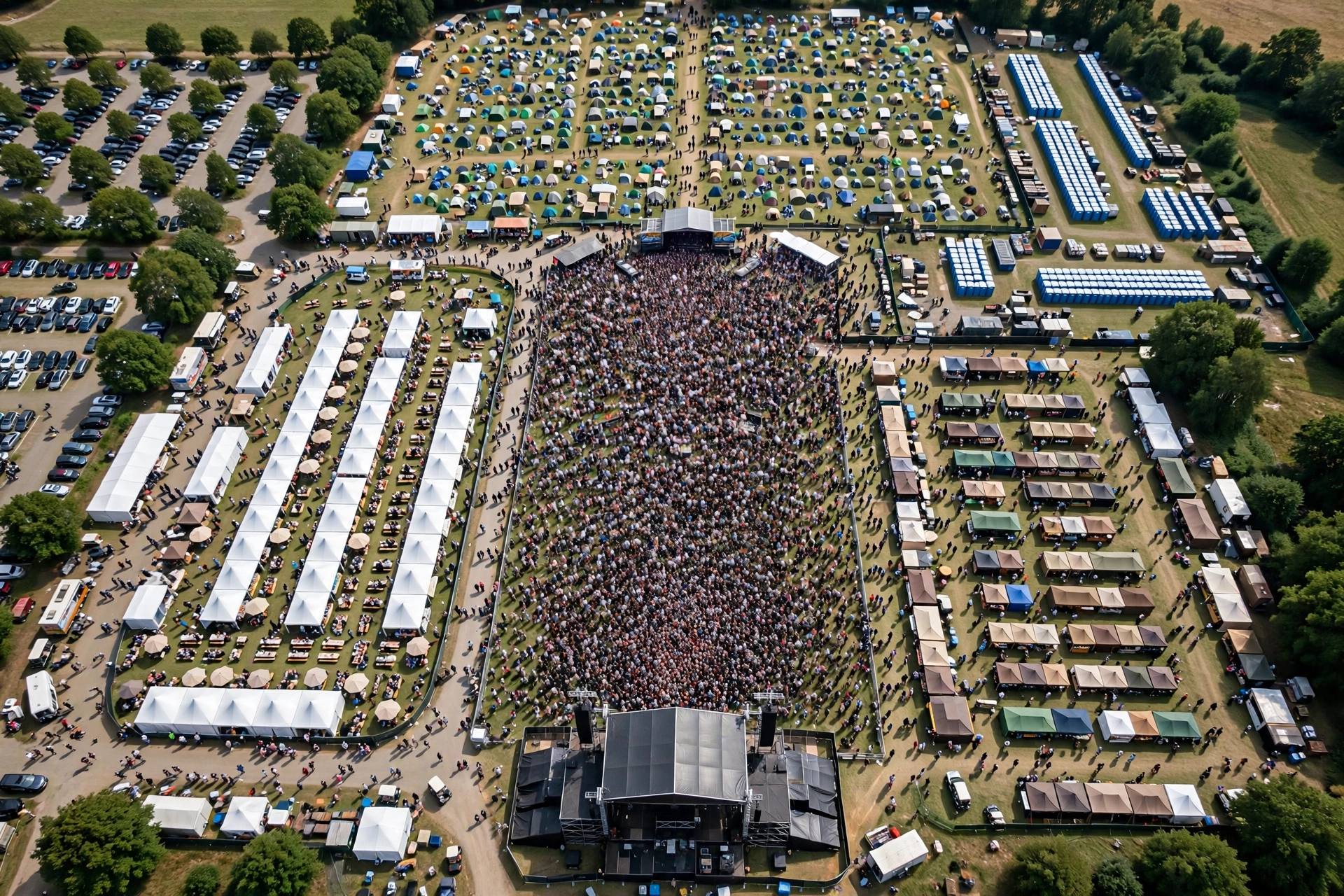
Every sizing conversation starts with a rule of thumb, and the industry has settled on ones that have survived decades of festivals, weddings, and jobsites. For a typical four-hour event without alcohol, plan roughly one portable toilet per fifty guests. For a construction site, federal OSHA rules set legal minimums starting at one facility for twenty or fewer workers. For weddings, tighten the ratio a notch because expectations run higher. These are starting points, not final answers — real life adds variables, and the adjustments below are where experience earns its keep.
Before the tables, burn this principle in: under-ordering is the classic, most regretted mistake in this business. Too few units means long lines, overwhelmed tanks, unhappy guests, and on jobsites, potential violations and a crew that quietly stops using the facilities. Over-ordering by one unit, by contrast, is cheap insurance that nobody ever regrets. When the math below gives you a choice between two numbers, take the higher one. Every time. Your future self, standing in front of a calm crowd and clean units, will thank you.
Event Sizing Table: Guest Count by Duration
For general outdoor events — festivals, fairs, community gatherings, tournaments, backyard parties — use this table as your baseline. It assumes standard portable toilets; if your mix includes deluxe units or restroom trailers, count each trailer stall roughly as one unit for capacity, then confirm with your supplier. Treat every figure as a minimum and adjust upward with the factors in the next section.
| Expected guests | 4-hour event | Full-day event (8+ hours) | 4-hour event with alcohol |
|---|---|---|---|
| 25 guests | 1 unit | 1 unit | 2 units |
| 50 guests | 1 unit | 2 units | 2 units |
| 100 guests | 2 units | 3 units | 3 units |
| 150 guests | 3 units | 4 units | 4 units |
| 250 guests | 5 units | 7 units | 7 units |
| 500 guests | 10 units | 13 units | 13 units |
| 1,000 guests | 20 units | 25 units | 25 units |
Reading notes from people who have watched these numbers play out in the field. First, the alcohol column reflects a widely observed reality: drinks increase restroom usage substantially, and experienced planners routinely add a meaningful share more capacity whenever alcohol is served. Second, duration is not linear — on full-day events, tanks fill, paper runs out, and units need attention, so longer events should plan scheduled mid-event servicing in addition to extra units. Our servicing guide explains how to schedule that. Third, these are per-event minimums for the crowd present at peak — size for the busiest hour, not the average headcount across the day.
Adjustments That Change the Math
The base ratio gets you in the neighborhood; the adjustments get you to the right address. Run through each one honestly before you finalize your count.
Alcohol service
The single biggest multiplier. Beer, wine, and cocktails increase both frequency and urgency of restroom use — every veteran event planner knows the lines get longer the moment the bar opens. If drinks are flowing, use the alcohol column in the table above as your baseline, and for heavy-drinking events like beer festivals, add further capacity beyond it. Also plan servicing to match: tanks fill faster, supplies burn quicker, and a mid-event pump-out on a multi-day festival is not optional.
Event duration
A two-hour ceremony needs far less capacity than an eight-hour festival, but the relationship is not a straight line. Long days compound every small shortfall: paper that would last four hours runs out at hour six, tanks that would hold a half-day crowd hit capacity by evening. For anything running six hours or more, add units beyond the table and lock in a servicing plan. For multi-day events, daily servicing between event days is standard practice, not a luxury.
Crowd demographics
Demographics move the needle more than most first-time planners expect. Events with a high proportion of women need more capacity — usage patterns differ and lines form faster, which is why wedding planners weight their counts accordingly. Families with children increase usage. Events skewing older mean more frequent visits and a stronger case for including ADA-compliant units beyond the minimum. Know your crowd and size for who is actually coming, not a generic average.
Heat and weather
Hot weather increases fluid intake and therefore restroom visits, while accelerating odor and burning through deodorizing chemistry faster. A July festival needs more capacity and more frequent servicing than the identical event in October. Cold has the opposite effect on usage but brings its own logistics — units still need winterized servicing, just on a different rhythm.
Food service
Where food is served, hand-wash stations become near-mandatory — many health departments require them — and they are sized alongside the toilets. A working rule: one hand-wash station for every four to six portable toilets at food-service events. Food also extends dwell time, which extends restroom demand across the event.
Demand peaks versus averages
Size for peaks, not averages. A wedding where two hundred guests arrive, eat, and celebrate together creates far sharper demand spikes than a festival where attendance spreads across the day. Intermissions, halftime, meal service, and the hour after the bar opens are the moments that break an under-ordered restroom plan. Tell your supplier about your schedule's peaks when you call — that detail is what separates a textbook count from a count that actually holds up.
Wedding Sizing: Comfort Counts Double
Weddings follow the same math as other events but with higher stakes and higher expectations. Guests are dressed up, the celebration runs five to six hours or more, alcohol is almost always served, and restroom lines are the kind of detail people remember long after the cake. Start with one unit per forty to fifty guests rather than stretching the ratio, and think about upgrading the tier, not just the count. This is where deluxe flushable units and luxury restroom trailers earn their keep: flushing toilets, running-water sinks, mirrors, and climate control feel appropriate at a wedding in a way a row of standard units never will — and they photograph better too.
A common wedding configuration is one restroom trailer for the main guest count plus at least one ADA-compliant unit, which many venues and local rules require for accessibility. For larger weddings, supplement the trailer with a few discreetly placed standard or deluxe units to absorb peak demand. Placement matters as much as quantity: close enough for convenience — especially for elderly guests — but screened from the ceremony and photo sight lines. Discuss sight lines with your supplier during planning, not on delivery day. And if the venue is remote, confirm service trucks can reach the units for setup and pickup. Our standard versus deluxe guide helps you choose the right tier mix for the day.
Construction Sizing: OSHA Sets the Floor
Jobsite sizing is not a comfort decision — it is a legal one. OSHA standard 29 CFR 1926.51(c), Table D-1, sets minimum toilet facilities by employee count, and the counts apply per shift at peak headcount. Here is the table translated into practical unit counts:
| Employees per shift (peak) | OSHA Table D-1 minimum | Practical portable toilet count |
|---|---|---|
| 20 or fewer | 1 facility | 1 unit |
| 21 to 40 | 1 toilet seat and 1 urinal per 40 workers | 1 unit |
| 41 to 80 | 1 toilet seat and 1 urinal per 40 workers | 2 units |
| 81 to 120 | 1 toilet seat and 1 urinal per 40 workers | 3 units |
| 121 to 160 | 1 toilet seat and 1 urinal per 40 workers | 4 units |
| 161 to 200 | 1 toilet seat and 1 urinal per 40 workers | 5 units |
| 201 to 250 | 1 toilet seat and 1 urinal per 50 workers | 5 units |
| 251 to 300 | 1 toilet seat and 1 urinal per 50 workers | 6 units |
Three things the table alone does not tell you. First, these are minimums — nothing stops you from providing more, and on spread-out sites you will need to: units must be reasonably accessible to the crew, so a sprawling highway project needs multiple clusters, not one central bank a ten-minute walk from the work. Second, the requirement covers condition as well as count — an overflowing or filthy unit can draw a citation as readily as a missing one, so pair the count with a real servicing schedule. Third, high-rise work has its own answer: crane-lift high-rise units that travel upward with the structure keep facilities near the crew at every level. Our full OSHA requirements guide covers Table D-1, washing facilities, exceptions, and a jobsite compliance checklist in detail.
The Golden Rules of Sizing
- Size for the peak hour, not the average headcount — peaks break restroom plans, averages do not.
- Alcohol, long duration, heat, and a women-heavy or family-heavy crowd all push the count up.
- Multi-day events need servicing scheduled between days, not just more units.
- Jobsites follow OSHA Table D-1 per shift at peak headcount — and the units must be kept clean and stocked.
- Pair toilets with hand-wash stations wherever food is served or crews handle contaminants.
- When the math offers two numbers, take the higher one. One extra unit is the cheapest insurance in the business.
One last piece of veteran advice: bring your numbers to the call. When you reach (855) 343-0136, have your headcount, event type, duration, alcohol plans, and venue details ready. Sizing is part of what a good supplier does every day — we will check your math against thousands of events and jobsites, catch the edge cases (the ceremony and reception in different fields, the jobsite with two work zones), and make sure the count is right before a single truck rolls. That conversation is free, and it is worth more than any table.
Sizing Questions, Answered
How many portable toilets do I need per person?
A common rule of thumb is one unit per fifty guests for a four-hour event without alcohol. Add capacity when alcohol is served, the event runs longer, the weather is hot, or the crowd skews toward women or families with children.
How many portable toilets for a wedding of 100 guests?
Plan two to three units for one hundred wedding guests, and consider upgrading to deluxe units or a restroom trailer for guest comfort. Always include at least one ADA-compliant unit for accessibility.
How many portable toilets for 200 or 500 guests?
For two hundred guests, plan at least four units — more with alcohol or a full-day schedule. For five hundred guests, plan at least ten, stepping up with alcohol and duration. Longer events also need scheduled mid-event servicing, not just more units.
How does alcohol change the calculation?
Significantly. Alcohol increases both frequency and urgency of restroom use, so experienced planners add meaningful extra capacity whenever drinks are served and schedule servicing to match the faster fill rate on multi-day events.
How many toilets does OSHA require on a construction site?
Under 29 CFR 1926.51(c) Table D-1: one facility for twenty or fewer employees, one toilet seat and one urinal per forty workers for larger crews, and one per fifty workers once the crew reaches two hundred. Counts apply per shift at peak headcount — see the table above.
Should I round up or down when the math is between two numbers?
Always round up. One extra unit is inexpensive insurance against long lines, overwhelmed tanks, and unhappy guests or workers. Under-ordering is the most common and most regretted sizing mistake in the business.
Do I need hand-wash stations too?
Whenever food is served, hand-wash stations are strongly recommended and often required by local health codes — plan roughly one station per four to six portable toilets. On construction sites handling concrete, solvents, or other contaminants, washing facilities are an OSHA expectation as well.
Can I just call and have someone size it for me?
Absolutely — sizing is part of the service, and it is free. Call (855) 343-0136 with your headcount, event type, duration, and venue details, and we will recommend the right unit count and mix. Lines are open Mon–Sat 7am–7pm CST, Sun 7am–12pm CST.
Ready When You Are
One call handles the whole thing: unit selection, delivery scheduling, servicing cadence, and pickup. Call (855) 343-0136 — lines are open Mon–Sat 7am–7pm CST, Sun 7am–12pm CST.
More Guides
- What Affects Porta Potty Rental Cost: 7 Pricing Factors Explained
- OSHA Portable Toilet Requirements for Construction Sites (2026 Guide)
- Do You Need a Permit for a Porta Potty? Rules by Placement Explained
- How Often Are Porta Potties Serviced? Schedules & What's Included
- What Makes a Porta Potty ADA Compliant? Specs & Requirements