Set It and Forget It — For Months, Not Days
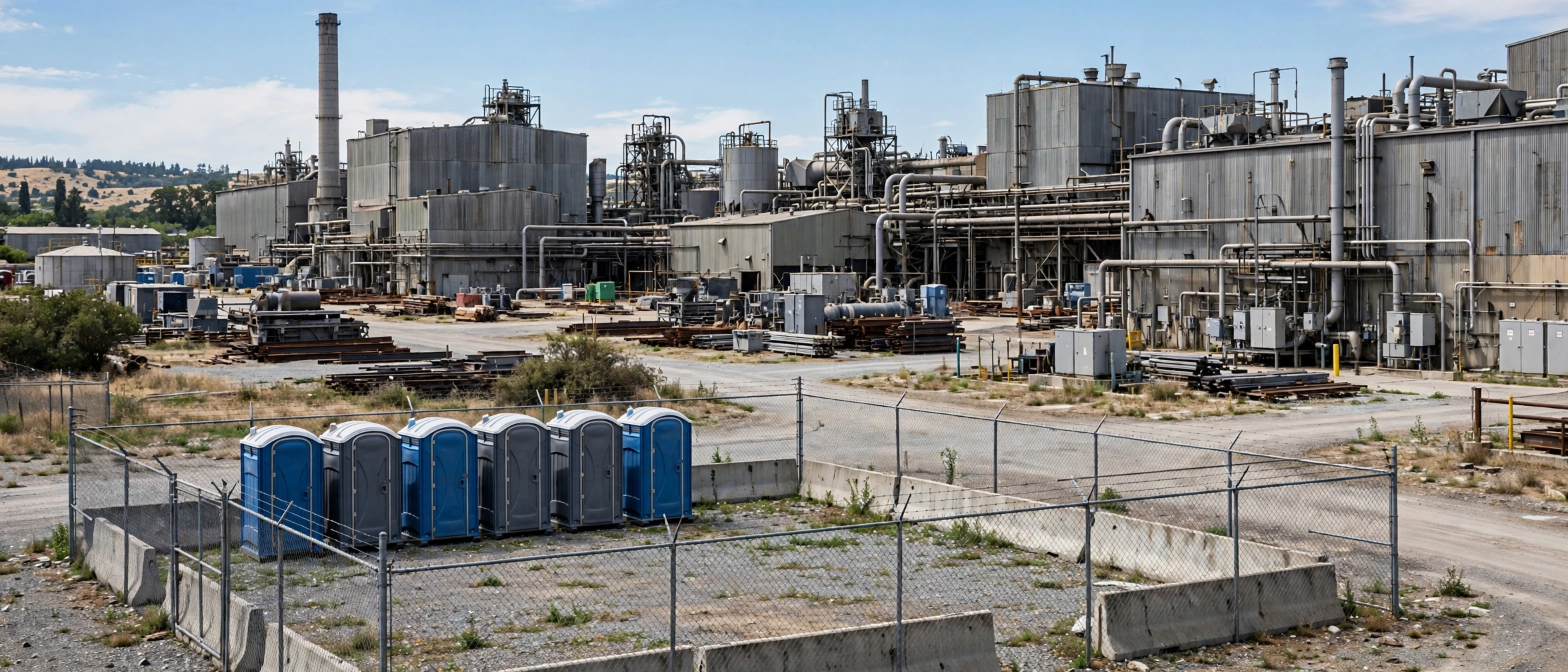
Some projects measure their timeline in months, not weekends. Multi-phase construction, long infrastructure jobs, industrial facilities with ongoing maintenance, seasonal operations, agricultural sites, remote work camps — they all need sanitation that runs itself for the long haul. Long-term portable toilet rental is built for exactly that: units placed once, serviced on a fixed schedule month after month, with the contract flexing as your headcount and phases change.
The difference between a long-term rental and a short one is not just duration. It is the service relationship. Over months, the driver learns your site: the gate code, the foreman's name, which bank fills fastest, where the mud gets bad after rain. The schedule adapts to your seasons — tighter in summer heat, winterized before the first freeze. Units get swapped or refreshed before wear shows. Problems get caught on the route, not reported after the fact. That is what months of the same tech on the same site buys you. Call (855) 343-0136 and we will build a long-term plan around your timeline and your phases.
Every long-term rental includes the same core: delivery, professional setup, scheduled servicing (pump-out, deodorizer recharge, wipe-down, restock), and final pickup. Same-day or next-day delivery is often available to get you started, and the contract adjusts as the project evolves — add units for peak phases, pull them back during slow stretches, relocate banks as the work moves.
Who Rents Long-Term
General contractors on multi-month and multi-year builds are the core customer: ground-up commercial, residential developments, highway and infrastructure work, industrial plant maintenance and turnarounds. Municipalities rent long-term for parks, public works yards, and seasonal facilities. Agricultural operations cover planting through harvest. Event venues with a full season — fairgrounds, racetracks, amphitheaters — run long-term contracts instead of rebooking every event.
Remote work camps and man-camps are a natural fit, often combining long-term toilet rental with shower trailers and holding tanks on a single service rotation. Disaster recovery operations run long-term contracts for the duration of the rebuild. If your need stretches past a month and the end date is fuzzy, long-term rental is the right structure — it is built for timelines that shift.
How the Long-Term Service Plan Works
It starts with a site walk — in person or over the phone with your site plan. We map unit counts to your crew size and phases, pick placement spots with truck access and crew traffic in mind, and set the service cadence: weekly per unit at the standard ratio, tighter for heavy use, heat, or large crews. The first service visit confirms the plan against reality, and we adjust from there.
Then the rotation runs. Same driver, same day, same thorough service: full pump-out, tank recharge with deodorizer, interior wipe-down, complete restock of paper and sanitizer. Units get inspected on every visit — door latches, vents, dispensers, structural condition. Worn units get swapped before they become a problem. Seasonal adjustments happen automatically: summer frequency bumps, winter freeze protection, spring repositioning after the thaw.
The contract breathes with the project. Crew doubles for the framing phase? One call adds units and the service cadence scales with the count. Punch list drops headcount to a skeleton crew? We pull units back. Site layout changes? We relocate banks with a day of notice. Nothing requires new paperwork — the long-term agreement is written for change, because every long project changes.
What Long-Term Costs Less Than You Think
The obvious alternative to a long-term rental is buying units outright. Run the real math before going there. Purchase price is just the entry fee — then you own the pump truck problem, the disposal problem, the maintenance problem, the winterization problem, and the storage problem between projects. A pump truck is a specialized vehicle with a licensed operator and permitted disposal contracts. Most contractors who buy units end up calling a service company anyway, and paying for the privilege of owning depreciating plastic.
Long-term rental bundles all of that into one predictable line item: equipment, servicing, disposal, maintenance, seasonal adjustments, and end-of-project removal. No capital outlay, no maintenance crew, no disposal permits to manage, no units rotting in the yard between jobs. When the project ends, the units leave and the cost stops. For anything under a couple of years, rental wins the math for almost every operation we serve.
Sizing a Long-Term Plan
Size for the steady state, flex for the peaks. The 1-per-10 rule for a 40-hour week is the starting point — our sizing guide has the full breakdown — then map it against your phases:
- Base count for the steady-state crew, serviced weekly — this is the backbone of the contract.
- Flex units for peak phases: framing, MEP stacking, concrete pours, turnaround surges. Added with a phone call, pulled back when the phase ends.
- Seasonal adjustment: summer heat and long daylight hours push usage up; plan the summer cadence in spring, not July.
- Spread the banks: on large or long sites, two or more banks beat one central cluster — walking time is the hidden tax on every phase.
- Include an ADA unit in the long-term plan where contracts or site policy require accessible facilities — serviced on the same rotation.
Review the plan quarterly, or at every major phase change. Fifteen minutes on the phone keeps the sanitation matched to the actual crew instead of the crew you planned six months ago. The projects that get this right treat the service tech as part of the site team — loop them in on schedule changes and the plan stays ahead of the work.
Real Long-Term Engagements
Highway widening, 40 crew, 14 months. Six units across two banks, weekly service, gate code on file. Units relocated three times as the work zone moved. Summer months ran a mid-week wipe-down during paving season. One contract, zero sanitation complaints for the whole job.
Residential development, phased over 2 years. Started with two units for grading, peaked at five during framing season across two phases, dropped to two for final punch list. Quarterly plan reviews with the super. The contract flexed four times; the paperwork never changed.
Industrial plant maintenance, ongoing. Four units at the contractor laydown area on a standing monthly rotation, now in its second year. Turnaround surges add six temporary units for three weeks, twice a year, on the same service route. The plant manager has not thought about restrooms in eighteen months — which is exactly the point.
Straight Answers
What counts as a long-term rental?
Generally anything past a month, with most long-term contracts running three months to a couple of years. The structure — fixed service rotation, flexible unit counts, seasonal adjustments — is built for timelines that shift, which is most real projects.
How does servicing work over many months?
Same driver on a fixed rotation: full pump-out, deodorizer recharge, wipe-down, and restock every visit, plus unit inspections. The schedule adapts to seasons automatically — tighter in summer heat, winterized before freezes. Worn units get swapped before they become a problem.
Can I change the unit count mid-contract?
Yes — that is the core feature. Add units for peak phases with a phone call, pull them back during slow stretches, relocate banks as the site changes. The service cadence scales with the count. No new paperwork.
Is renting cheaper than buying units for a long project?
For almost every project under a couple of years, yes. Buying means you also own the pump truck, disposal permits, maintenance, winterization, and storage problems. Rental bundles all of that into one predictable cost, and the units leave when the project ends.
What happens at the end of the contract?
Final pump-out, units loaded, site left clean — scheduled around your demobilization. If the project extends, the contract extends with it. If you need units again next season, we keep your site plan on file so restart is one phone call.
Do long-term rentals include winter service?
Yes. Winterization is part of the plan: tanks pumped down before hard freezes, non-toxic antifreeze in the rotation, and service frequency adjusted for freeze-thaw conditions. Cold weather does not interrupt the rotation.
Quarterly Reviews: Keeping the Plan Honest
The biggest waste in long-term sanitation is a plan that stopped matching reality three months ago. Crew counts drift. Phases slip. A bank of units sized for the framing peak sits half-empty during interiors, and nobody calls to pull them back. The fix is stupidly simple: a fifteen-minute review call every quarter, or at every major phase change, where you tell us the actual headcount and the next phase's plan, and we adjust the counts and the service cadence to match.
What to bring to the review: current crew size, next phase's expected headcount, any layout changes that affect placement or truck access, and any complaints or patterns the foreman has noticed — a bank that fills faster than the others, a unit that keeps getting blocked by material deliveries, seasonal issues like mud or wind. The service tech's observations feed into this too; the driver sees your site every week and notices patterns before they become problems.
The review also covers the equipment itself. After months of service, units get a condition check: door hardware, vents, dispensers, interior surfaces. Anything showing real wear gets swapped for a fresh unit on the next service visit — no waiting for a failure, no embarrassing the site in front of a client walkthrough. Long-term does not mean run-down. The fleet should look as good in month fourteen as it did in month one, and the review cycle is what guarantees it.
Can long-term units be relocated within the site?
Yes — relocation is routine on long projects. Grading reshapes the ground, phases move the work, and the units follow. Give us a day of notice, mark the new spots with truck access in mind, and the service team moves the banks. Planned relocations can also be folded into the quarterly review so the site plan stays ahead of the work.
Ready When You Are
One call handles the whole thing: unit selection, delivery scheduling, servicing cadence, and pickup. Call (855) 343-0136 — lines are open Mon–Sat 7am–7pm CST, Sun 7am–12pm CST.
Related Services
- Construction Porta Potty Rental
- Event Porta Potty Rental
- Wedding Porta Potty Rental
- Luxury Restroom Trailer Rental
- ADA Portable Toilet Rental
- Deluxe Flushable Porta Potty Rental
Serving all 48 contiguous states and Washington DC — see all locations.