Sanitizer Is a Backup. Soap and Water Is the Standard
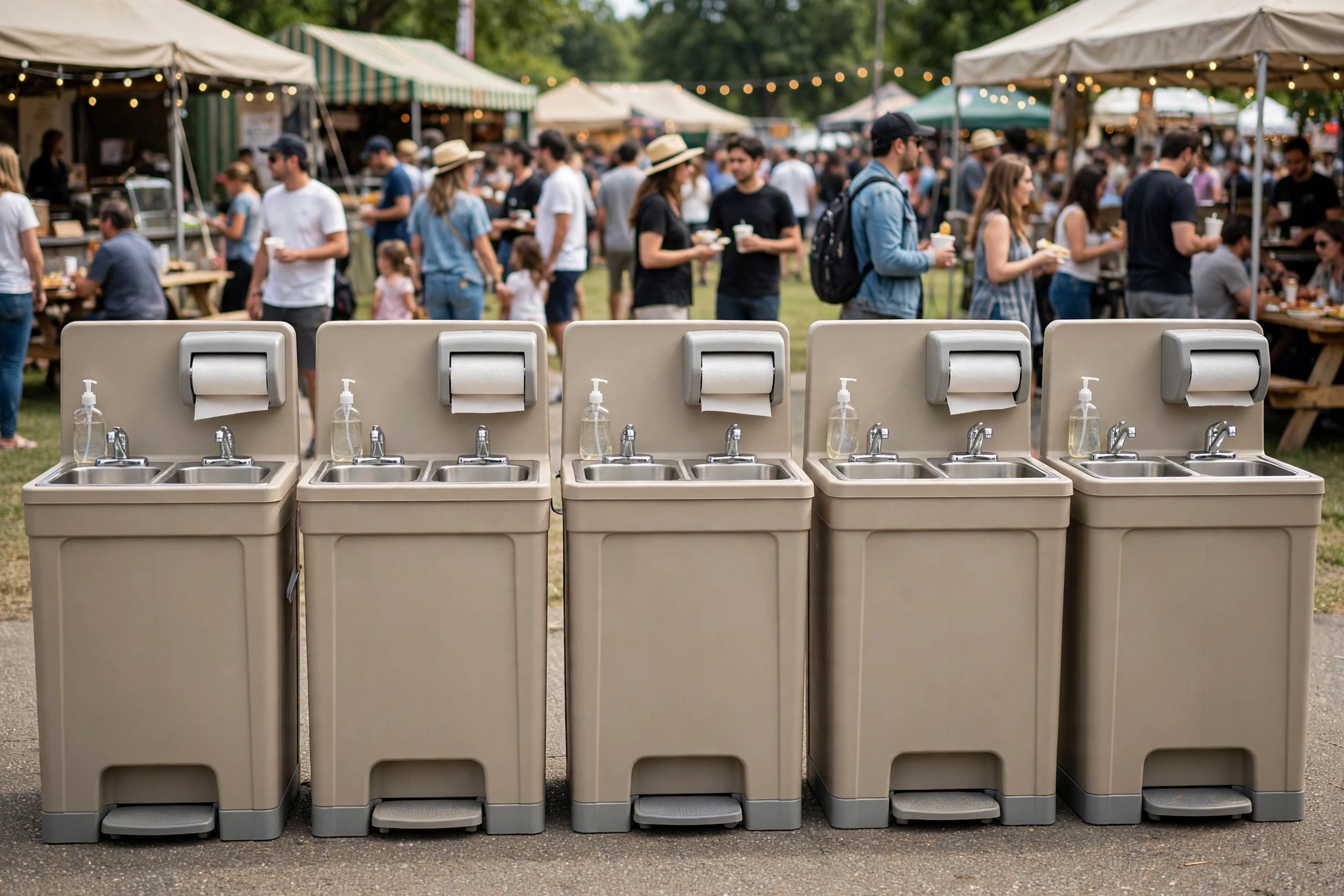
Hand sanitizer has its place, and its place is a backup plan. When health inspectors, site safety plans, or plain common sense require real handwashing, you need soap, running water, and a way to catch the wastewater. That is what a portable hand wash station delivers: a self-contained sink with a freshwater tank, a foot pump, liquid soap, paper towels, and a gray-water catch basin. No plumbing. No hookups. No building required within sight.
Food service is where this gets serious. Health departments in most states require proper handwashing stations at food prep areas, food truck setups, temporary kitchens, farmers market booths, festival food vendors, and catering operations serving food outdoors. Sanitizer does not count. Wipes do not count. You need a sink with running water and soap, period. Call (855) 343-0136 and we will tell you what your local health department expects and set you up with stations that meet the requirement.
Food is not the only driver. Concrete crews, remediation teams, painters, landscapers, and anyone handling chemicals or contaminated soil need to wash up before eating, drinking, or driving home at the end of the day. Event guests notice real sinks near the dining area — it signals a well-run event. Construction supers use hand wash stations to take pressure off the toilet lines and keep safety inspectors satisfied. Wherever hands get dirty and there is no faucet within reach, a hand wash station closes the gap fast.
Who Rents Hand Wash Stations
Caterers and food truck operators are the biggest callers, followed by event organizers running food zones at festivals, fairs, farmers markets, and community gatherings. Construction and demolition crews rent them for concrete work, soil handling, and any job where workers come off the site with dirty hands. Disaster response and volunteer cleanup operations set them up at staging areas. Schools and churches use them for outdoor fundraisers and field-day events. Anywhere people gather around food or get their hands filthy outdoors, these stations earn their keep.
If you already rent portable toilets from us, hand wash stations are the natural add-on. A bank of standard units with a hand wash station next to it is the setup health departments and safety managers want to see. Many clients book the combination: jobsite units for the crew, stations for the washup. For events, pair them with event restrooms so guests have the complete setup.
How the Stations Work
The design is dead simple, which is why it works everywhere. A freshwater tank — typically twenty-plus gallons on a single-basin station, more on multi-basin units — sits inside a rugged cabinet or on a stand. The user steps on a foot pump, which pushes clean water up through the faucet. Hands-free operation: no touching a tap handle with dirty hands. Soap comes from a mounted dispenser, paper towels from a covered holder, and the used water drains into a sealed gray-water catch basin below. No puddles. No mess soaking into the ground.
Single-basin stations handle light to moderate traffic — a small vendor booth, a jobsite break area, a backyard party. Double and multi-basin stations serve busier lines: festival food courts, large crews, registration areas at races. For heavy-duty use we can add a stand with a trash receptacle for paper towels, because a station without a trash can becomes a litter problem by the second hour. Some sites add a separate ADA accessible unit nearby so everyone on site can use the facilities comfortably.
Cold weather takes a little planning. The freshwater tank and foot pump can freeze in a hard cold snap, so winter setups get positioned out of the wind, drained at night on the coldest jobs, or swapped for stations on a tighter service rotation. Tell us the season and the site conditions and we will spec the right station type for the weather.
Delivery, Setup, and Servicing
Delivery is straightforward: the truck rolls in, sets each station on firm level ground near your food zone, break area, or toilet bank, fills the freshwater tank, loads the soap and paper towels, and checks the pump. Stations go where the traffic is — within a few steps of the food prep line, at the entrance to the dining area, or beside the unit bank on a jobsite. If health inspectors are involved, we can place them exactly to the spec your permit requires.
Servicing keeps the stations running through the whole rental. The service tech pumps the gray water, refills the freshwater tank, restocks soap and towels, wipes down the basins, and empties the trash. Weekly service covers normal jobsite use; multi-day events and heavy food-service traffic get daily or mid-event visits. Busy food zones can burn through a freshwater tank fast on a hot day, so we watch consumption and bump the service frequency when usage warrants it. Pickup is drain, load, and gone.
Sizing: How Many Stations You Need
There is no single official ratio, but field experience gives reliable rules of thumb. Start here:
- One station per food prep area or vendor booth that handles unpackaged food — health departments typically require this as a minimum.
- One station per 50 to 75 guests near event dining areas, placed where the food line can see it.
- One station per bank of portable toilets on a jobsite, so workers can wash after using the facilities.
- One station per 15 to 20 workers on crews handling concrete, soil, chemicals, or waste — hand hygiene before meals and at shift end.
- Add extra stations for peak days: opening day of a festival, concrete pour days, big volunteer turnout days.
Watch the gray-water capacity as closely as the headcount. A station serving a busy food line can fill its catch basin in a single shift on a hot day. That is not a sizing failure — it is a service frequency question. Tell us your peak traffic and we will build the service cadence to match, so stations never sit full when people need them.
Our sizing guide covers restroom counts for the same events and jobsites — size the toilets and the hand wash stations together and the whole sanitation plan lines up.
Real-World Setups
County fair, 5 food vendors, 4 days. Five single-basin stations, one at each prep tent per the health department permit, plus two double-basin stations at the main dining pavilion. Daily morning service: freshwater refill, gray-water pump, full restock. Stations positioned to the inspector's spec before opening day — passed with zero issues.
Concrete crew, 18 workers, 3-month job. One double-basin station at the break area next to the unit bank. Weekly service on the same route as the toilets. Foreman reports handwashing before lunch went from optional to automatic once the station was ten steps from the tables.
Charity 5K, 400 runners, one morning. Two stations at the finish-line food tent, one double-basin at the registration area. Drop off the evening before, pickup that afternoon. Total rental: two days.
Straight Answers
Do hand wash stations need a water or power hookup?
Neither. Every station carries its own freshwater tank and a foot pump, so they work anywhere with level ground. Gray water collects in a sealed catch basin that our service techs pump out on the service schedule.
Will these pass a health department inspection for food vendors?
Yes — the stations are built for exactly that requirement: running water via foot pump, liquid soap, paper towels, and gray-water containment. Check your local permit for any specific placement rules, and we will set the stations to match.
How many people can one station serve?
A single-basin station handles light to moderate traffic — one vendor booth or a small crew. Busy food zones and large crews want double or multi-basin stations. Plan roughly one station per 50 to 75 guests at dining areas, or one per bank of toilets on a jobsite.
What happens to the wastewater?
Used water drains into a sealed gray-water catch basin inside the station — no puddles, no soaking into the ground. Our service tech pumps the gray water and refills the freshwater on each visit, so the station stays functional and sanitary.
Do stations work in freezing weather?
With planning. We position winter stations out of the wind, drain tanks at night during hard freezes, or tighten the service rotation. Tell us the season and conditions and we will spec the right setup.
Can I add hand wash stations to a portable toilet rental?
Absolutely — it is one of the most common combinations. Stations next to the unit bank is the setup inspectors and safety managers want to see. One call adds them to your order and the delivery truck brings everything together.
Pairing Stations With the Rest of Your Sanitation Plan
Hand wash stations work best as part of a complete setup, not a standalone afterthought. The classic jobsite combination is a bank of portable toilets with a station at each end — workers use the facilities, wash up, and get back to work without a second trip anywhere. For events, the winning layout puts stations at the dining area entrance and near the restroom banks, so guests hit them coming and going. When you book both together, delivery arrives on one truck and placement gets planned as a single layout instead of two separate puzzles.
Timing matters on multi-day setups. A station that runs dry on day two of a three-day event is worse than no station at all — it signals neglect. That is why the service schedule is part of the quote, not an upsell. We size the freshwater capacity and the visit frequency against your actual traffic, and the service tech checks consumption on every visit. High-traffic food zones often need a larger multi-basin station rather than more single-basin units: one big station with a trash receptacle is easier to keep stocked and cleaner than three small ones scattered around.
How do you keep stations from running dry during a busy event?
The service schedule is sized to your traffic, not a generic chart. High-use food zones get larger multi-basin stations with bigger freshwater tanks, and multi-day events get daily or mid-event service visits. The tech checks consumption on every visit and bumps the frequency if a station is burning through water faster than planned.
Ready When You Are
One call handles the whole thing: unit selection, delivery scheduling, servicing cadence, and pickup. Call (855) 343-0136 — lines are open Mon–Sat 7am–7pm CST, Sun 7am–12pm CST.
Related Services
- Construction Porta Potty Rental
- Event Porta Potty Rental
- Wedding Porta Potty Rental
- Luxury Restroom Trailer Rental
- ADA Portable Toilet Rental
- Deluxe Flushable Porta Potty Rental
Serving all 48 contiguous states and Washington DC — see all locations.