You can order the right units in the right quantity and still get it wrong. Placement is where portable toilet plans live or die. Put units too far and nobody uses them. Put them where the service truck cannot reach and they turn foul by day three. Put them upwind of the food tent and your event has a smell problem that no amount of deodorizer fixes. Every one of these failures is avoidable, and every one of them comes from treating placement as an afterthought.
This guide is the placement checklist we walk through with customers on the phone. It covers events and jobsites separately, because the priorities differ, but the physics are the same: level ground, truck access, sensible distances, and respect for sight lines, food areas, and accessibility. Get these right and the restrooms fade into the background, which is exactly where they belong.
The Golden Rules of Placement
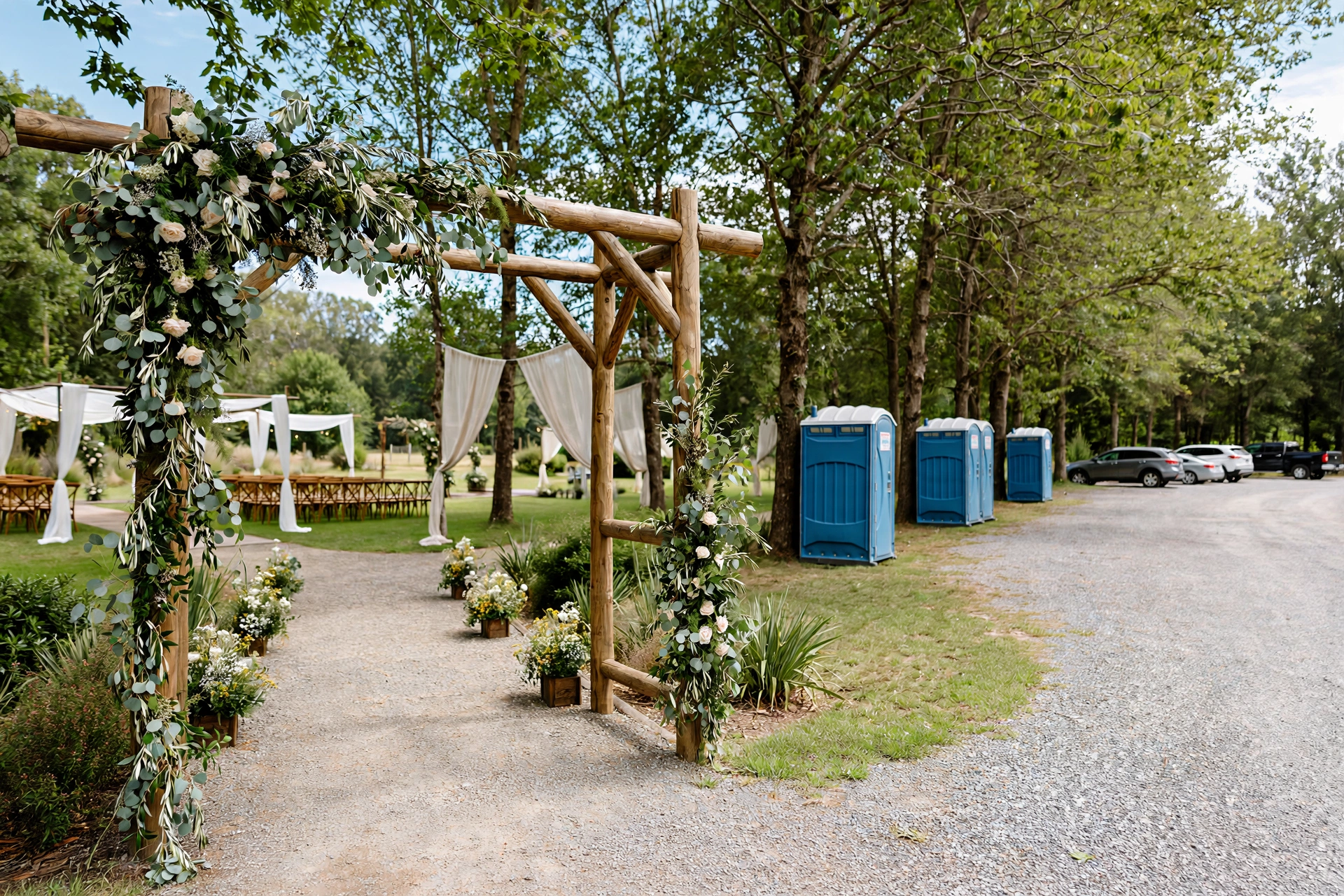
Six rules govern every placement decision, on every site, every time:
- Level ground first. Units must sit flat. A tilted unit is uncomfortable, the door may not latch, and waste does not sit right in the tank.
- Service-truck access always. The pump truck has to reach every unit on every service visit. Plan placement with the hose in mind, not just delivery day.
- Balance distance and discretion. Close enough that people actually use them; screened enough that they are not the backdrop of your photos.
- Separate from food. Restrooms and food service stay apart — for odor, for flies, and for health code compliance.
- Keep ADA paths clear. Accessible units need firm, level ground and a step-free route from the main areas. No curbs, no gravel pits, no detours.
- Think about wind. Place units downwind of seating, dining, and gathering areas. Check the prevailing wind, not just today's breeze.
Level Ground First: The Non-Negotiable
Start here because everything else depends on it. A portable toilet on a slope is a bad unit: the door swings wrong or will not latch, the seat feels off, and the tank contents pool to one side, which makes servicing harder and odor worse. On a real slope, a unit can even feel tippy, and nobody uses a restroom they do not trust.
How to check: stand where the unit will go and look. Then put a level on it if you are unsure — your phone has one. Gentle, even grades are fine; our drivers level units with blocking as part of setup. What does not work: hillsides, drainage swales, the edge of a ditch, or any spot where water pools after rain. A unit sitting in a puddle is a unit with a mud moat around the door by afternoon.
For events on lawns and fields, pick the high, flat spots and avoid low areas that collect water. For jobsites, grade a small pad if you have to — ten minutes with a skid steer beats a month of tilted units. And whatever the site, have a backup spot in mind. Delivery day sometimes reveals that the perfect spot is softer than it looked, and a plan B keeps the truck moving.
Service-Truck Access: The Rule Everyone Forgets
Here is the placement mistake we see most: units placed perfectly for guests and impossibly for the service truck. Every unit gets pumped, recharged, and restocked on a schedule — and the pump truck needs to get a hose to every tank. If you fence the units in, park equipment around them, or place them across a locked gate, servicing stops happening. A unit that cannot be serviced becomes a problem within days, guaranteed.
The practical standard: the service truck needs to park within hose reach of the units, on ground it can drive without getting stuck. That means planning placement before the fencing, staging, and parking plans are final — not after. Leave a clear drive path to every bank of units, and make sure gates on that path stay unlocked or that the driver has the code. On multi-week jobsites, protect that access lane like it matters, because once the laydown yard creeps over it, servicing gets missed.
Tell us about access when you book. If the truck cannot reach a spot, we will tell you on the phone instead of discovering it on delivery day. Send photos of tight or unusual sites — a thirty-second look at a photo saves a failed delivery. This is also why we ask about placement on the order call: Call (855) 343-0136 and we will sanity-check your plan before the truck rolls.
Jobsite Placement: Keep Them Close to the Work
On a jobsite, the governing principle is proximity. OSHA requires facilities to be available, but the real standard is whether the crew actually uses them. Units parked a ten-minute walk from the work area might satisfy a headcount table while failing the only test that matters: workers will not hike across the site for every break, so they improvise, and improvised sanitation on a jobsite is a health and morale disaster.
Place units near the active work zones but clear of the danger: outside the swing radius of equipment, away from material delivery lanes, and off the haul road. On large or linear sites — highway work, subdivisions, big commercial pads — split units into multiple clusters instead of one central bank. Two units at each end of the site beat four units in the middle that half the crew never reaches.
Plan for movement. Work zones shift as phases progress, and the toilets should move with them. Build relocation into the servicing schedule: when the crew moves to the next phase, the units move too. For vertical work, high-rise units ride the structure upward so the crew never climbs down ten floors for a break. And keep units out of the laydown and staging areas — nothing kills a unit faster than being used as a windbreak for the material pile.
Event Placement: Flow, Sight Lines, and Common Sense
Events run on foot traffic, so place units where the people are — near entrances and exits, by the main stage or field, close to parking, and wherever lines naturally form. Spread banks across the venue rather than clustering everything in one spot. Multiple smaller banks beat one mega-bank: shorter walks, shorter lines, and if one bank has an issue, the event still has restrooms.
Now the counterweight: sight lines. At weddings and formal events, units go close enough for convenience — especially for elderly guests — but screened from the ceremony area, the photo spots, and the main views. Lattice screening, draping, or natural landscaping all work. At casual events the bar is lower, but nobody wants the restroom bank as the backdrop of the stage photos. Walk the sight lines yourself before delivery day.
Signage is the cheap win everyone skips. At any event over a couple hundred people, put up simple signs pointing to the restrooms from the main areas. Guests should never have to ask where the toilets are. For evening events, make sure the units and the paths to them are lit — a dark walk to an unlit bank of units is a safety problem, not just an inconvenience.
Keep Them Away From Food: Odor, Flies, and Health Codes
This one is non-negotiable. Restrooms go nowhere near food service, food prep, or dining areas. Three reasons. First, odor: even well-serviced units have a smell footprint, and placing it next to the buffet is how you ruin appetites. Second, flies: they travel between waste and food, which is a health problem, not just a gross one. Third, health codes: many jurisdictions require minimum separation distances between portable toilets and food operations, and health inspectors at permitted events check this.
The flip side: hand-wash stations belong near food, not the toilets. Health departments love — and often require — real soap-and-water handwashing where food is served. So the layout is: restroom banks at a sensible distance from the food area, and hand-wash stations right by the food. That arrangement satisfies guests, vendors, and inspectors at the same time. As a rule of thumb, keep restrooms at least fifty feet from food service, more if the wind tends to carry toward the dining area.
ADA Placement: Accessibility Is a Location Problem
An ADA-compliant unit in the wrong spot is barely better than no ADA unit. Accessible units need firm, level ground — no soft grass that wheelchairs sink into, no gravel that stops wheels cold. They need a step-free route from the main event or work areas: no curbs without ramps, no stairs, no narrow gates. And they need to be reachable without a long detour, because a quarter-mile accessible route that nobody can find might as well not exist.
Place ADA units on the most accessible path, not tucked behind the standard bank. At events, that usually means near the main entrance or the primary accessible route, clearly signed. On jobsites, it means on the main travel path at grade. And the ground in front of the door matters as much as the route: a firm, level pad at the entrance, not mud. Our ADA compliance guide covers the unit specs; this is the placement half of the same requirement.
What to Avoid: The Placement Hall of Shame
Learn from other people's mistakes. Do not place units:
- In low spots that flood — the first heavy rain turns the area into a pond and the units into islands.
- On soft, muddy ground — units sink, tilt, and become unreachable for the service truck.
- Blocking emergency access — fire lanes, hydrants, and emergency vehicle paths stay clear, always.
- Directly upwind of seating or dining — check the prevailing wind direction for the season, not just delivery day.
- On steep slopes — doors will not latch, tanks sit wrong, and the unit feels unsafe.
- Behind locked gates with no code for the driver — missed servicing is the fastest route to a foul unit.
- Under low tree limbs or power lines — delivery trucks need overhead clearance, and falling limbs damage roofs.
- Where delivery trucks cannot turn around — a dead-end placement that traps the truck traps your schedule too.
Mark Your Spots Before Delivery Day
The single best thing you can do before the truck arrives: mark exactly where each unit goes. Cones, spray paint, flags — whatever survives until delivery day. Marked spots turn a twenty-minute placement discussion into a five-minute drop. Unmarked sites turn into guessing games, and guessing games end with units in the wrong place and a second trip to fix it.
Walk the site with this guide a day or two before delivery. Check ground firmness after rain, confirm the service path is clear, verify gate codes, and look at sight lines from the spots that matter — the ceremony area, the stage, the main entrance. Take photos of the marked spots and keep them on your phone. If anything looks questionable, call us before delivery day at (855) 343-0136. Moving a paint mark is free. Moving a placed unit costs a truck roll.
Frequently Asked Questions
How far should portable toilets be from food areas?
Keep restrooms at least fifty feet from food service, food prep, and dining areas — more if the wind blows toward the food. Many health codes specify minimum separations, and inspectors check this at permitted events. Put hand-wash stations near the food instead; they belong there and toilets do not.
Can portable toilets go on a slope?
Gentle, even grades are fine — drivers level units with blocking during setup. Real slopes are not: doors will not latch, tanks sit unevenly, and the unit feels tippy. Pick flat ground, or grade a small pad on jobsites.
How close should units be to the event or work area?
Close enough that people actually use them without thinking about it. On jobsites, near the active work zones but clear of equipment swing and haul roads. At events, near entrances, stages, and parking — spread in multiple banks across the venue rather than one distant cluster.
Does the service truck really need access to every unit?
Yes, on every service visit. The pump truck must park within hose reach of each tank. Plan placement before fencing and staging are final, keep gates on the service path unlocked or share the code, and protect the access lane on long jobsites. No access means no servicing, and unserviced units fail fast.
Where should ADA portable toilets be placed?
On firm, level ground with a step-free route from the main areas — near the primary accessible path, clearly signed, not tucked behind the standard bank. Avoid soft grass, gravel, curbs without ramps, and long detours. The pad in front of the door needs to be firm and level too.
Should I mark placement spots before delivery?
Yes. Cones, spray paint, or flags marking each unit's exact spot turn delivery into a five-minute drop instead of a twenty-minute debate. Walk the site a day or two ahead, check ground firmness and sight lines, and photograph the marked spots.
Ready When You Are
One call handles the whole thing: unit selection, delivery scheduling, servicing cadence, and pickup. Call (855) 343-0136 — lines are open Mon–Sat 7am–7pm CST, Sun 7am–12pm CST.
More Guides
- What Affects Porta Potty Rental Cost: 7 Pricing Factors Explained
- How Many Portable Toilets Do I Need? Sizing Guide, Tables & Calculator
- OSHA Portable Toilet Requirements for Construction Sites (2026 Guide)
- Do You Need a Permit for a Porta Potty? Rules by Placement Explained
- How Often Are Porta Potties Serviced? Schedules & What's Included