Waste Storage for Sites With No Sewer in Sight
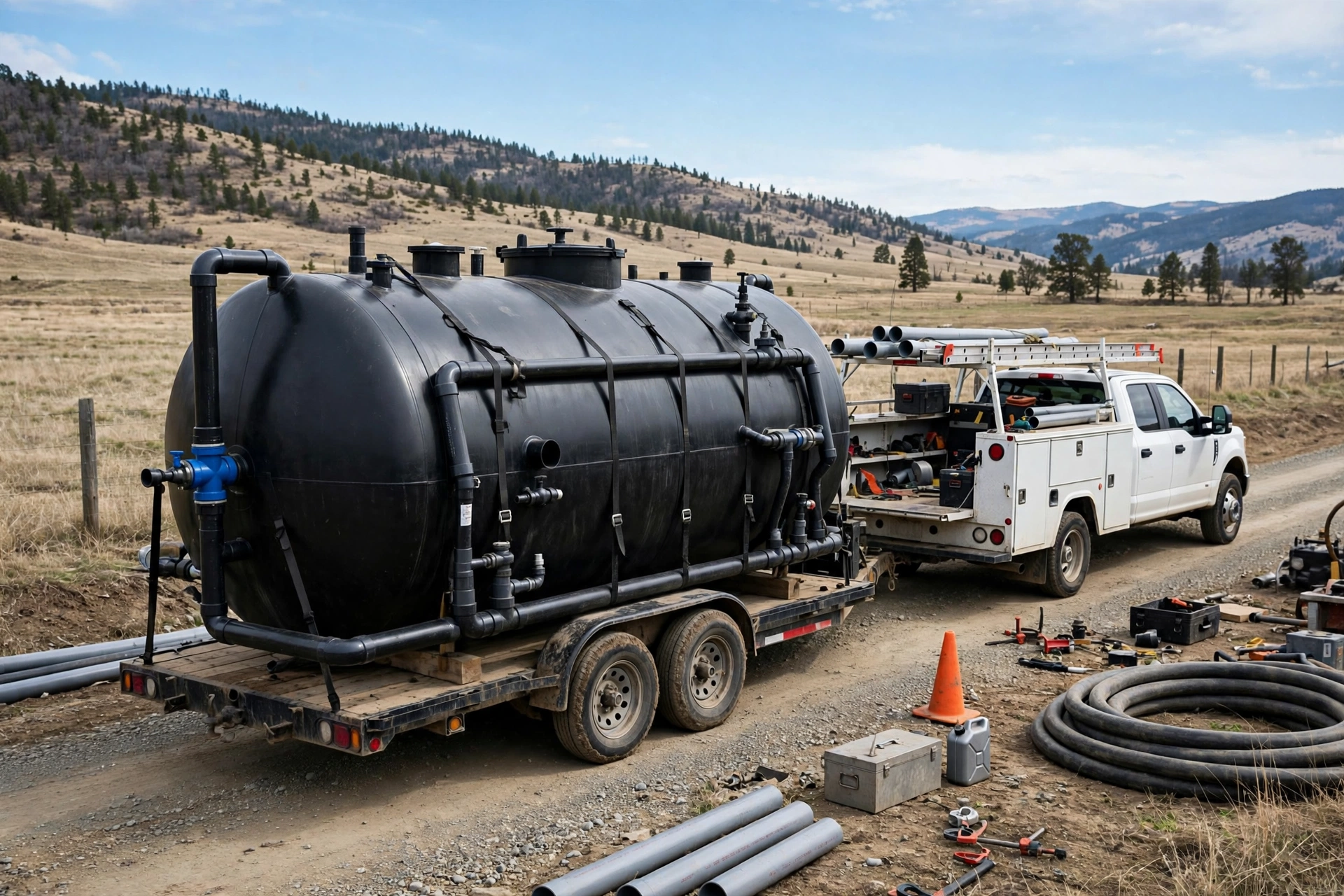
Some sites produce wastewater with nowhere to put it. Remote construction camps, long-term jobsites without sewer access, seasonal operations, temporary kitchens, RV and equipment staging areas — the toilets and sinks are easy to place, but every flush and every wash has to go somewhere. A waste holding tank rental gives you that somewhere: a sealed, high-capacity tank that collects wastewater from your portable restrooms, sinks, trailers, or site facilities until our pump truck hauls it away on the service schedule.
Think of it as the missing middle of remote-site sanitation. Standard portable toilets carry their own small holding tanks, which works fine when a service truck visits weekly. But restroom trailers, shower trailers, portable kitchen setups, and long-term camps burn through that capacity fast. A dedicated holding tank — hundreds to a couple thousand gallons — absorbs the volume between pump-outs so the whole system keeps running without daily service visits. Call (855) 343-0136 and we will size the tank to your fixtures and your pump-out schedule.
Every tank we place is sealed, vented, and sited to code: set back from wells, waterways, and property lines per local requirements, on firm level ground the pump truck can reach. This is regulated equipment handled by licensed haulers — wastewater goes to permitted disposal facilities, documented on every pump-out. No shortcuts, no gray-area dumping, no surprises.
Who Rents Holding Tanks
General contractors on remote or long-term builds where the site has no sewer connection and the portable restroom fleet needs a central collection point. Camp operators — man-camps, work camps, seasonal agricultural housing — running shower trailers and restroom trailers for dozens or hundreds of residents. Event venues with permanent seasonal infrastructure that lacks municipal sewer: fairgrounds, festival grounds, race tracks, remote wedding venues.
Disaster response staging areas use them behind shower and restroom trailers during multi-week deployments. Temporary kitchen and food-service operations collect gray water in smaller tanks. RV parks and equipment yards use them for dump stations. If your site generates wastewater and the nearest sewer is a mile away — or nonexistent — a holding tank is the professional answer.
Tank Sizes and How They Connect
Tanks come in a range of capacities, from a few hundred gallons for a single restroom trailer up to a couple thousand gallons for full camps and long-term sites. The right size is a function of two numbers: how much wastewater your fixtures generate per day, and how often the pump truck visits. A restroom trailer serving 150 people a day generates serious volume — pair it with a tank sized for several days of buffer plus margin for the pump-out schedule.
Connections are straightforward. Restroom trailers, shower trailers, and site-built facilities tie into the tank through sealed inlet lines; portable sinks and kitchen gray water feed in through their own lines. Every connection is sealed and vented — no open troughs, no overflow risk when sized correctly. Level gauges or sight tubes let your site contact watch the fill level between service visits, and we build the pump-out schedule with enough margin that the tank never runs near full.
Placement rules matter and we handle them. Tanks sit on firm, level ground within hose reach of the pump truck — typically within 50 to 100 feet of truck parking. Setbacks from wells, waterways, and property lines follow local health department rules, and we confirm the placement against your jurisdiction's requirements before delivery. On long-term sites, the tank stays for the duration; on projects, it can relocate as the work moves.
Delivery, Pump-Out Service, and Pickup
Delivery day: the truck sets the tank on the prepared spot, levels it, connects the inlet lines from your fixtures, checks every seal and vent, and walks your site contact through the level gauge. If fixtures are not in place yet, we coordinate delivery around your setup — tank first, fixtures second, connections verified before anything goes live.
Pump-out service runs on a fixed schedule — weekly, twice weekly, or whatever the volume math demands. The driver pumps the tank down, checks the connections and vents, and logs the volume and the disposal manifest for your records. Sites with variable occupancy — camps that surge, events with peak weekends — get a schedule that flexes, with on-call pump-outs available when the gauge climbs faster than expected. At the end of the rental, we do a final pump-out, disconnect, and haul the tank away. The site is left clean.
Sizing Guidance
Start with daily wastewater volume, then multiply by the days between pump-outs, then add margin:
- Restroom trailer, 100 to 150 users per day: plan on several hundred gallons per day of wastewater — a 1,000-plus-gallon tank gives multi-day buffer with weekly service.
- Shower trailer, 50 showers per day: several hundred gallons per day; size the tank to the pump-out schedule with room for surge days.
- Long-term jobsite with 20 portable toilets feeding a central tank: the tank extends the interval between full-fleet pump-outs and simplifies the service route.
- Seasonal venue or camp: size for the peak weekend, not the average week — the tank has to absorb your worst day, not your typical one.
- Always add 20 to 30 percent margin above the calculated volume. A tank that runs near full has no room for a delayed service visit or a surprise surge.
If the math feels uncertain, that is what the phone call is for. Tell us the fixtures, the headcount, and the pump-out frequency you want, and we will spec the tank size and the schedule together. Undersized tanks cause emergency pump-outs. Oversized tanks cost a little more to place and save a lot of headaches. We will tell you which side of that line your site sits on.
Real-World Setups
Man-camp, 80 residents, 6 months, no sewer. Two restroom trailers and one 8-stall shower trailer feeding a 2,000-gallon holding tank. Twice-weekly pump-outs, level gauge checked daily by the camp manager. Zero overflows across the whole deployment.
Remote wedding venue, seasonal, 200-guest events. One restroom trailer with a 750-gallon holding tank. Pump-out scheduled between events during the season; final pump-out and tank pull at season end. The venue runs a full season of events with no permanent septic investment.
Highway job, 40 crew, 9 months. Portable toilet fleet plus one central holding tank behind the field office bank. Weekly pump-outs on the same route as the units. Simplified the service logistics for the whole site.
Straight Answers
What is a waste holding tank used for?
It collects wastewater from portable restrooms, restroom trailers, shower trailers, sinks, and temporary kitchens on sites with no sewer connection. The sealed tank stores the waste between scheduled pump-outs by our licensed haulers.
What sizes are available?
From a few hundred gallons for a single trailer up to a couple thousand gallons for camps and long-term sites. We size the tank from your daily wastewater volume, your pump-out frequency, and a 20 to 30 percent margin for surges and schedule slips.
Where does the pumped wastewater go?
To permitted disposal facilities, documented with a manifest on every pump-out. This is regulated waste handled by licensed haulers — there are no shortcuts and no gray-area dumping, ever.
How often does the tank get pumped?
On a fixed schedule — weekly, twice weekly, or as the volume math demands — with on-call pump-outs available when the level gauge climbs faster than expected. The schedule is built with margin so the tank never runs near full.
What are the placement requirements?
Firm level ground within hose reach of truck parking, with setbacks from wells, waterways, and property lines per local health department rules. We confirm placement against your jurisdiction's requirements before delivery.
Can the tank move if our site layout changes?
Yes. Tanks can be pumped down, disconnected, and relocated as projects progress or camps shift. Give us notice, confirm the new spot meets the setback and access requirements, and we handle the move.
Permits, Setbacks, and Staying on the Right Side of the Rules
Wastewater storage is regulated, and the rules vary by jurisdiction — which is exactly why you want a provider who handles the compliance side. Most health departments require setbacks from wells, waterways, and property lines, plus proper venting and sealed connections. Some jurisdictions want a permit or a notification on file for tanks above a certain size or for rentals past a certain duration. We confirm the requirements for your location before delivery and place the tank to spec, so the inspector's visit — if one happens — is a non-event.
Documentation is part of the service. Every pump-out generates a manifest showing the volume hauled and the permitted disposal facility that received it. Keep those manifests with your site records; they are your proof of proper handling if a regulator, a client, or a project owner ever asks. Long-term sites sometimes get asked for this during audits, and having a clean paper trail from day one beats reconstructing it later.
The most common compliance mistake is improvising: a site that rigs its own tank, skips the setbacks, or has waste hauled by an unlicensed operator. The fines dwarf the cost of doing it right, and the environmental liability is real. A rented tank with licensed pump-out service keeps the whole chain legitimate — permitted equipment, permitted haulers, permitted disposal, documented every step.
How do I know what size tank my site needs?
Give us three numbers: the fixtures feeding the tank, the daily headcount, and how often you want pump-outs. We calculate the daily wastewater volume, multiply by the days between service visits, and add 20 to 30 percent margin for surges. If the math lands between sizes, we go up — an oversized tank is cheap insurance against emergency pump-outs.
What if our wastewater volume spikes unexpectedly?
It happens — a camp surges, an event weekend outdraws the forecast, a phase runs longer shifts. The level gauge is your early warning: when it climbs faster than the schedule expects, call us and we add an on-call pump-out or tighten the rotation. That is why we build margin into the sizing and keep the service schedule flexible.
Ready When You Are
One call handles the whole thing: unit selection, delivery scheduling, servicing cadence, and pickup. Call (855) 343-0136 — lines are open Mon–Sat 7am–7pm CST, Sun 7am–12pm CST.
Related Services
- Construction Porta Potty Rental
- Event Porta Potty Rental
- Wedding Porta Potty Rental
- Luxury Restroom Trailer Rental
- ADA Portable Toilet Rental
- Deluxe Flushable Porta Potty Rental
Serving all 48 contiguous states and Washington DC — see all locations.