Jobsite Sanitation That Keeps the Crew Working
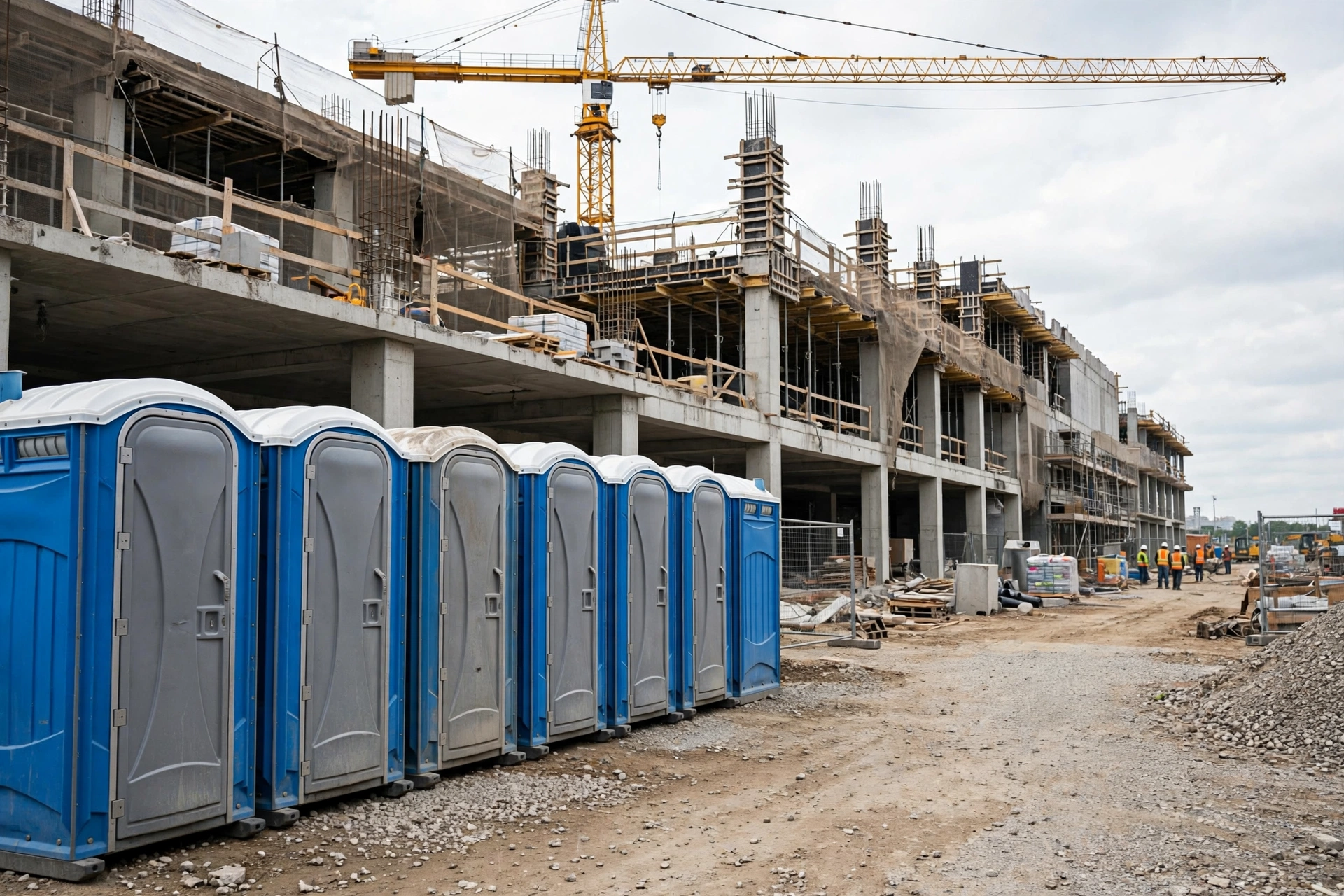
A construction crew without nearby restrooms is a crew losing time every single day. Guys hike across the site, wait in line, or worse — improvise. Construction porta potty rental exists to kill that problem dead: clean standard units placed where the work actually happens, serviced on a weekly schedule that holds through dust, mud, and schedule chaos. You call (855) 343-0136, we spec the count for your crew size and phases, and the units show up ready for a full shift.
The math that matters is simple. The industry rule of thumb is one unit per 10 workers on a 40-hour week with weekly servicing. OSHA's construction sanitation standard sets the legal floor lower than that — treat the regulation as the minimum and the 1-per-10 ratio as the working target. On a 60-person crew running ten-hour days, the difference between the legal minimum and enough units shows up directly in wait times and lost labor hours. Round up. An extra unit is cheap. A restroom line is not.
Spread beats concentration on big footprints. Two banks of units on opposite ends of the site beat one central bank every time, because nobody should burn fifteen minutes round-tripping for a break. Hot weather, concrete pour days, and stacked trades all push demand above baseline. Tell us the crew count, shift length, and site layout, and we will map a unit plan that scales as phases change.
Who Rents Construction Units
General contractors running ground-up builds, highway and infrastructure crews, residential developers with multi-lot sites, demolition outfits, and specialty subs who need their own bank away from the main crew. If your people are on site eight-plus hours a day and the nearest real bathroom is a drive away, this is your service. Short utility jobs, multi-year developments, and everything in between — the rental flexes to the timeline.
Site supers love this service for one reason: it is one less thing to manage. The service schedule runs itself. The driver has the gate code. Units get pumped, wiped down, and restocked without anyone on your team lifting a finger. When the framing crew doubles next month, one call adds units. When punch list starts, we pull them back. That is how jobsite sanitation is supposed to work.
The Units: Built for Jobsite Abuse
Construction units are standard portable toilets spec'd for hard daily use: rugged polyethylene shells, vented holding tanks, toilet paper dispensers, and hand sanitizer in every unit. They take muddy boots, dusty air, and a full crew cycling through all day. Each weekly service is a full pump-out, a tank recharge with deodorizer, an interior wipe-down, and a complete restock. Not a quick pump-and-go — a real cleaning.
Building vertically? High-rise units mount a standard portable on a steel skid with certified sling points, built to ride the tower crane or construction elevator floor to floor. Once the structure passes the third or fourth floor, upper-level units save each worker serious time versus riding the hoist down for every break. The tanks are smaller, so they get pumped on a tighter rotation — we plan that into the service schedule from day one.
Cold weather does not stop construction, and it does not stop our units. Before hard freezes we pump tanks down and add non-toxic antifreeze so contents stay pumpable. Keep doors latched against the wind, site units out of the prevailing wind where possible, and keep a shoveled path for the service tech. Winter often means more frequent service, not less, because freeze-thaw cycles fill tanks fast.
Delivery, Servicing, and Pickup on Your Schedule
Delivery lands in a window that works around your operation — before the crew arrives, during a quiet stretch, whenever the site is accessible. Mark your spots or we will help pick them: firm, level ground within hose reach of truck parking, clear of excavation edges, crane swings, and overhead lines. On fenced sites, leave the gate code with us. Nothing stalls a service route like a locked gate nobody mentioned.
Servicing runs weekly per unit at the standard ratio, more often for heavy-use phases, summer heat, or crew spikes. The driver pumps, recharges, wipes down, and restocks — and relocates units as grading and vertical work reshape the site. Give us a day of notice and mark the new spots. Pickup at project end is the same deal: final pump-out, load, and gone, scheduled around your demobilization.
Sizing It Right: Crew Count, Shifts, and Phases
Start with the 1-per-10 rule for a 40-hour week, then adjust. Ten-hour shifts push it up. Summer heat pushes it up. A spread-out site pushes it up — walking time is the hidden tax. A 25-person crew: three units on weekly service is comfortable. A 50-person crew: five, split into two banks if the footprint is large. A 100-person peak with concrete pours: ten or more, with flex units on standby for the big days.
Phase your order instead of guessing one number for the whole project. Grading might need a single unit. Framing and MEP stacking bring peak headcount. Punch list drops back down. We build the contract to breathe: add units with a phone call, pull them back the same way, and the service cadence adjusts with the count. Our sizing guide has the full breakdown including the OSHA table.
On Real Jobsites
Highway widening, 40 crew, 6 months. Four units at the field office bank, two at the far end of the work zone. Weekly service, mid-week wipe-downs during paving when dust is worst. Units relocate as the work zone moves — planned a week ahead with the super.
12-story concrete frame, peak 80 workers. Six ground units for the street-level trades and deliveries, two high-rise units riding the crane starting at the fourth floor. Upper units pumped twice weekly. Ground bank stays; high-rise units move up with the deck.
Residential development, 30 lots, phased over a year. Two units that move lot to lot with the active work, scaled to three during framing season. One service day per week, gate code on file, foreman looped in on the schedule.
Straight Answers
How many portable toilets does a 25-person crew need?
Three units on weekly service covers a 25-person crew comfortably at the 1-per-10 ratio. OSHA minimums would allow fewer, but that is a legal floor, not a productivity standard. Longer shifts, heat, or a spread-out site push the count higher.
How often are jobsite units serviced?
Weekly per unit is standard at the normal ratio. Heavy-use phases, summer heat, and crew spikes call for twice-weekly visits. Every service is a full pump-out, deodorizer recharge, interior wipe-down, and restock of paper and sanitizer.
Can you move units around the site as work progresses?
Yes — relocation is normal jobsite service. Give us a day of notice, mark the new spots, and keep service-truck access in mind so the pump-out route stays clear.
What if a unit gets tipped over or damaged?
Call us right away. We upright or swap the unit, pump out any spill, and document the condition. Most tipping comes from high wind or equipment contact — siting against a windbreak prevents nearly all of it.
How much lead time do you need for delivery?
Standard ground units typically deliver in a day or two. High-rise crane units and large multi-unit orders may need a few extra days. Emergency same-week delivery is often possible — Call (855) 343-0136 and we will tell you straight what is doable.
Project Phases: What Changes When
A jobsite is not one thing. It is five different jobsites stacked in a row, each with its own headcount and its own headaches. Grading phase: a handful of operators and laborers, and a single unit covers the whole spread. Framing and vertical phase: the crew triples, the trades stack on top of each other, and that single unit becomes a line. Concrete and MEP: peak headcount, the longest days, the hardest demand. Interior finish: the crew thins but the building closes in, so placement matters more than raw count. Punch list: skeleton crew, one or two units, and you are watching the calendar. Plan the rental around the phases, not the project, and the numbers stay right all the way through.
That is why the contract flexes. Start with what grading needs. Scale up when framing mobilizes. Add flex units for the pour weeks when the headcount spikes for three days and drops back. Pull units when the punch-list crew is twelve guys and a super. You never carry peak capacity through the quiet months, and you never stand in a line during the busy ones. One call adjusts the count, and the service cadence follows the count automatically. Your foreman does not manage it. Your PM does not track it. It just scales.
Delivery Day: What Actually Happens
Delivery day runs on a simple sequence. The truck arrives inside your window — early morning before the crew, or whenever the site is quiet and accessible. The driver confirms the spots with your super or whoever holds the keys. Units come off the truck, get set on firm level ground, leveled, stocked with paper and sanitizer, and checked: doors latch, vents clear, dispensers full. Banks on opposite ends of the site get a placement walk before a single unit drops, so the layout matches how the crew actually moves.
What we need from you is short: marked spots or a walk-through decision, a gate code if the site is fenced, and someone with authority to sign off on placement. That is the whole list. Firm ground within hose reach of where the truck can park is the one non-negotiable — the pump truck comes back to the same spots every service, so a placement that works on delivery day works all project long. Mark the spots the day before and delivery runs minutes per unit.
More Straight Answers
What if the crew doubles for a two-week push?
Call us and we add units for the push, then pull them back when it ends. Short-term spikes get short-term units on the same weekly service. The surest way to keep morale up during a crunch is making sure nobody waits in line for a restroom.
Do units need to be locked at night?
Standard units latch from the inside and can be secured from the outside with a simple hasp or zip tie if the site has overnight security concerns. Most fenced jobsites leave them as-is. On open sites near public areas, a basic lock keeps them crew-only.
Who handles a unit that gets vandalized?
Call us. We document the condition, repair or swap the unit, and get it back in service fast. Damage from equipment contact or high wind is a siting problem — we fix the placement at the same time so it does not repeat.
Can you service on weekends?
Yes. Service routes run seven days a week, and weekend visits are normal on projects running six or seven-day schedules. Set the cadence once and it holds through the whole job.
Related Services
- Event Porta Potty Rental
- Wedding Porta Potty Rental
- Luxury Restroom Trailer Rental
- ADA Portable Toilet Rental
- Deluxe Flushable Porta Potty Rental
- Hand Wash Station Rental
Serving all 48 contiguous states and Washington DC — see all locations.