Hot Showers, Wherever the Work Is
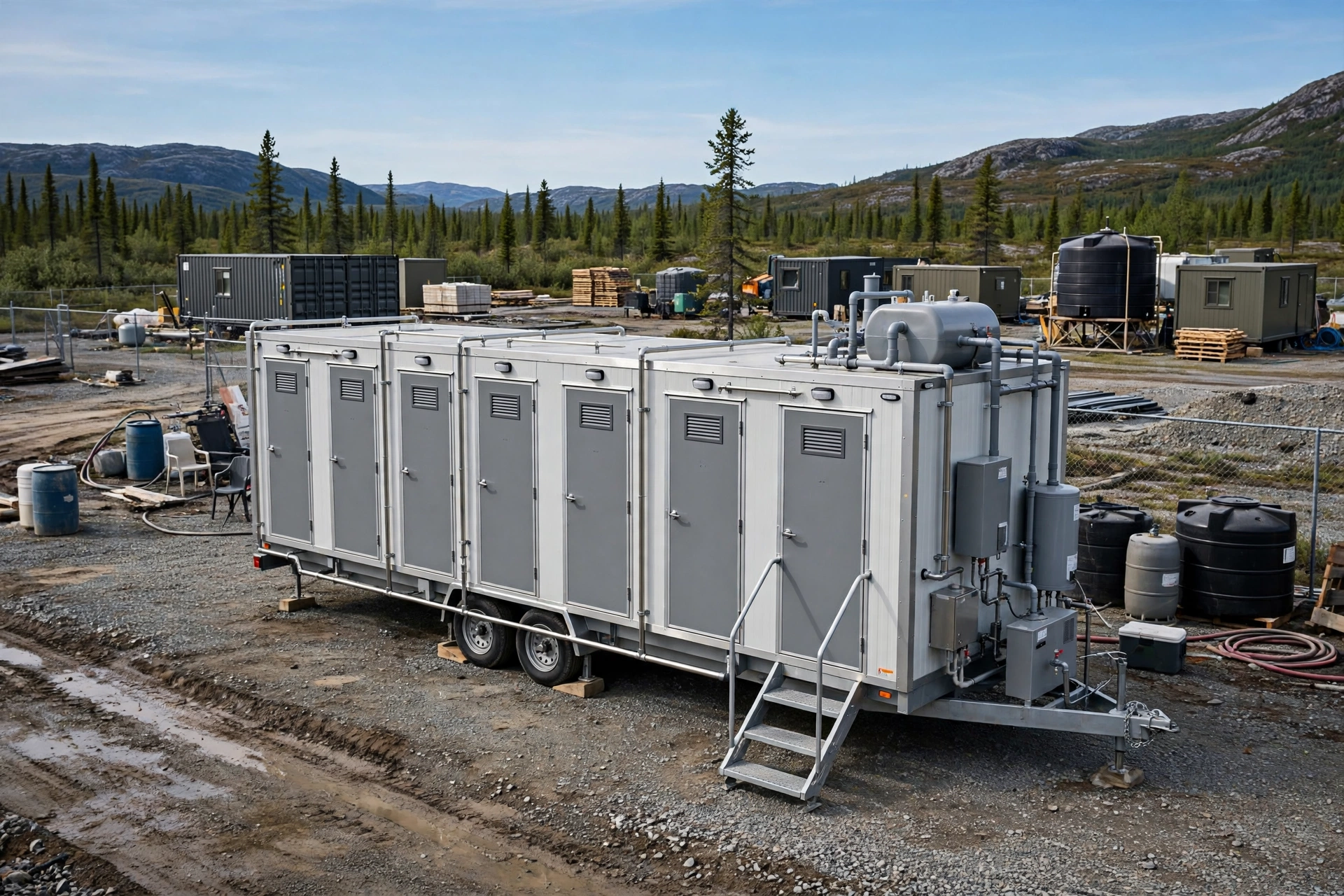
Some jobs keep people away from home for days at a time. Wildfire camps, disaster response staging areas, pipeline spreads, remote construction, big festivals with camping, film productions on location — wherever people sleep on site, they need a real shower. A portable shower trailer delivers exactly that: private locking stalls with hot running water, dressing areas, mirrors, and proper drainage, set up on a trailer that rolls in behind a truck and is operational in a matter of hours.
This is not a luxury. After a twelve-hour shift in dust, mud, or smoke, a hot shower is what keeps a crew functional for day two, day ten, day thirty. Emergency management contracts spec shower trailers for a reason: hygiene drives morale, morale drives retention, and retention drives the whole operation. When your people live on site, showers are infrastructure, not a perk. Call (855) 343-0136 and we will match a trailer to your headcount and your site's utilities.
The trailers scale from compact units with a few private stalls to multi-station rigs that run hundreds of showers a day on a rotation. Every rental includes delivery, setup, orientation for your site contact, scheduled servicing through the rental, and pickup. Same as every rental we do: one call, the whole logistics chain handled.
Who Rents Shower Trailers
Emergency management and disaster response contractors are the heaviest users: hurricane, flood, and wildfire response camps where hundreds of workers stage for weeks. Oil, gas, and pipeline crews on remote spreads. Construction outfits on long remote builds — dams, transmission lines, wind farms. Military and training exercises. Event organizers running multi-day festivals with camping or volunteer villages that live on site for the run of the show.
Film and production companies keep them on location for cast and crew when the shoot runs far from facilities. Municipalities use them for temporary shelter operations. Agricultural operations bring them in for harvest season when the workforce camps near the fields. If your operation has people sleeping within walking distance of the work for more than a couple of days, shower trailers belong in the logistics plan.
Inside the Trailer: What Your Crew Actually Gets
Private locking stalls, each with a shower head, temperature control, a bench or dressing area, hooks for clothes, and a mirror. Hot water on demand from the trailer's water heaters — sized so the recovery keeps up with a steady rotation of users. Anti-slip flooring, ventilation that actually moves air, and interior lighting. The men's and women's sides are separate with their own entrances, and most trailers include at least one accessible stall.
The difference between a good trailer and a bad one is throughput and water heating capacity. A two-stall unit serves a small crew fine. Once you pass fifty people on site, you want more stalls or you get lines at shift change — exactly when everyone wants to shower at once. We spec stall count against your headcount and your shift schedule so the morning and evening rushes move through without a queue.
Servicing is the invisible half of the product. Daily or scheduled visits handle gray-water pump-out, freshwater refill, restocking of soap and paper products, and cleaning of every stall. On long deployments, a scheduled service rotation keeps the trailer running indefinitely — this is standard for multi-week disaster response and remote construction camps.
What Your Site Needs to Provide
Three things: level ground, power, and water — same as our restroom trailers. The trailer needs a firm, level pad roughly two parking spaces for a mid-size unit, plus truck and trailer maneuvering room for delivery. The ground has to take the weight; soft turf or steep grades will not work, and the delivery route needs clearance for the full rig.
Power runs the water heaters, pumps, and lighting. Smaller trailers need dedicated 20-amp circuits; larger multi-station units may need 30 or 50 amps. A rented generator covers it where grid power is not available — and on remote sites, it usually is not. Water comes from a hose hookup at the site, or from a large holding tank we can arrange for truly remote locations. Wastewater collects in the trailer's gray-water tank for pump-out on the service schedule, or connects to a sewer cleanout where one is available.
Setup takes a few hours: leveling, power and water connections, water heater firing, and a full systems check before handover. We walk your site contact through the operation — how to run the showers, what to do if a stall acts up, who to call at any hour. Lines are open Mon–Sat 7am–7pm CST, Sun 7am–12pm CST.
Sizing: Stalls Against Headcount and Shifts
The math centers on shift change. Most of your crew will want a shower in the same one-to-two-hour window at the end of the shift. Plan for that peak, not the daily average:
- Up to 25 people on staggered schedules: a 2 to 4 stall trailer keeps lines short.
- 50 to 100 people on a single shift: 6 to 8 stalls, or stagger shift end times across two shower windows.
- 100 to 200 people: 8 to 12 stalls with a managed rotation — most disaster-response camps run this scale.
- 200-plus: multiple trailers, phased deliveries, and a full service rotation with daily gray-water pump-outs.
- Assume 8 to 12 minutes per shower in your rotation math — faster than home, realistic for a working crew.
Water is the hidden constraint. A hundred showers a day burns through thousands of gallons of freshwater and generates the same in gray water. On sites without a municipal connection, that means a water delivery plan and a gray-water pump-out schedule, both built into the service rotation. We plan this with you up front so the trailer never runs dry at the end of a shift.
Real Deployments
Wildfire response camp, 150 personnel, 6 weeks. Two 8-stall trailers, daily servicing with freshwater top-up and gray-water pump-out every morning. Generators for power, water delivered by tanker on a standing schedule. Showers ran in two rotations per shift change; zero downtime for the whole deployment.
Pipeline spread, 60 crew, 4 months, remote. One 6-stall trailer at the man-camp. Water from an on-site well with a holding tank buffer, gray water pumped twice weekly. The trailer stayed with the camp as the spread moved — one relocation mid-contract, planned a week ahead.
Music festival, 3 days, camping for 5,000. Four shower trailers at the campground, token-based access through the event organizer, overnight servicing each night. Shower lines were the shortest lines on the grounds.
Straight Answers
What utilities does a shower trailer need?
Level ground, power, and water. Smaller units run on dedicated 20-amp circuits; larger ones may need 30 or 50 amps — a generator covers remote sites. Water comes from a hose hookup, a delivered tanker, or a holding tank; gray water is pumped out on the service schedule.
How many people can one shower trailer serve?
It depends on stalls and shift timing. A 2 to 4 stall unit covers up to 25 people; 6 to 8 stalls handle 50 to 100 on a single shift; larger camps use 8 to 12 stall trailers or multiple units with managed rotations. Plan for the shift-change peak, not the daily average.
How long does setup take?
A few hours once positioned: leveling, utility connections, water heater firing, and a full systems check. We walk your site contact through the operation before handover so your team can run the daily routine.
How are shower trailers serviced during long deployments?
Daily or scheduled visits: gray-water pump-out, freshwater refill, restocking, and cleaning every stall. On multi-week deployments the service rotation runs indefinitely — standard for disaster response camps and remote construction.
Can the trailer relocate if our camp moves?
Yes. Relocation is normal for pipeline, transmission, and wind-farm work. Give us a week of notice, confirm the new pad is level with utility access, and we move the trailer and re-establish the service rotation.
Do you rent shower trailers for disaster response on short notice?
Yes — emergency deployments are one of our core use cases. Call and we will tell you straight what inventory can reach your staging area and on what timeline. Same-day and next-day deployment is often possible.
Water Logistics: The Make-or-Break Detail on Remote Sites
Everything about a shower trailer comes back to water — getting it there and getting the used water out. A hundred showers a day means thousands of gallons in and thousands of gallons out, every single day. On sites with a municipal water connection and a sewer cleanout, this is a non-issue: hook up and run. On remote sites, it becomes a logistics operation that has to be planned with the same seriousness as fuel and food.
Freshwater typically arrives by tanker on a standing delivery schedule, stored in a buffer tank so the trailer never runs dry between deliveries. Gray water collects in the trailer's holding tank and gets pumped out on the service rotation — daily for large camps, less often for smaller crews. The two schedules have to stay in sync: running out of freshwater mid-shift is a morale disaster, and an overflowing gray-water tank shuts the showers down. We build both schedules into the service plan from day one, with the level gauges checked on every visit.
For the most remote deployments — wildfire camps, pipeline spreads miles from the nearest town — we pair the trailer with a dedicated holding tank for gray-water buffer capacity. The bigger the buffer, the more forgiving the pump-out schedule. When you call (855) 343-0136, bring your headcount and your site's water situation; the water plan is the first thing we solve, because everything else depends on it.
What happens if a shower trailer has a problem mid-deployment?
Call us and we respond. Most issues — a clogged drain, a temperamental water heater, a stall door latch — get fixed by the service tech on the next scheduled visit or an emergency call-out. For critical long-term deployments we keep swap options in the plan, because a camp without showers is a camp with a morale problem. Your site contact gets a direct line for anything urgent.
Ready When You Are
One call handles the whole thing: unit selection, delivery scheduling, servicing cadence, and pickup. Call (855) 343-0136 — lines are open Mon–Sat 7am–7pm CST, Sun 7am–12pm CST.
Related Services
- Construction Porta Potty Rental
- Event Porta Potty Rental
- Wedding Porta Potty Rental
- Luxury Restroom Trailer Rental
- ADA Portable Toilet Rental
- Deluxe Flushable Porta Potty Rental
Serving all 48 contiguous states and Washington DC — see all locations.