Short answer: yes. Portable toilets get used through winter every year on construction sites, at winter events, and at facilities across the northern states. Cold does not break the concept. But cold changes the operating reality: waste behaves differently, servicing needs tighten up, placement matters more, and the user experience drops a few notches unless you plan for it.
This guide is the cold-weather playbook — what freezing temperatures actually do to a portable toilet, how winter servicing differs, where to place units when the ground is frozen, what to tell your crew or guests to expect, and when a heated restroom trailer is the smarter call. No miracle products, no marketing fluff. Just what works when the thermometer drops.
The Short Answer: Yes, With Adjustments
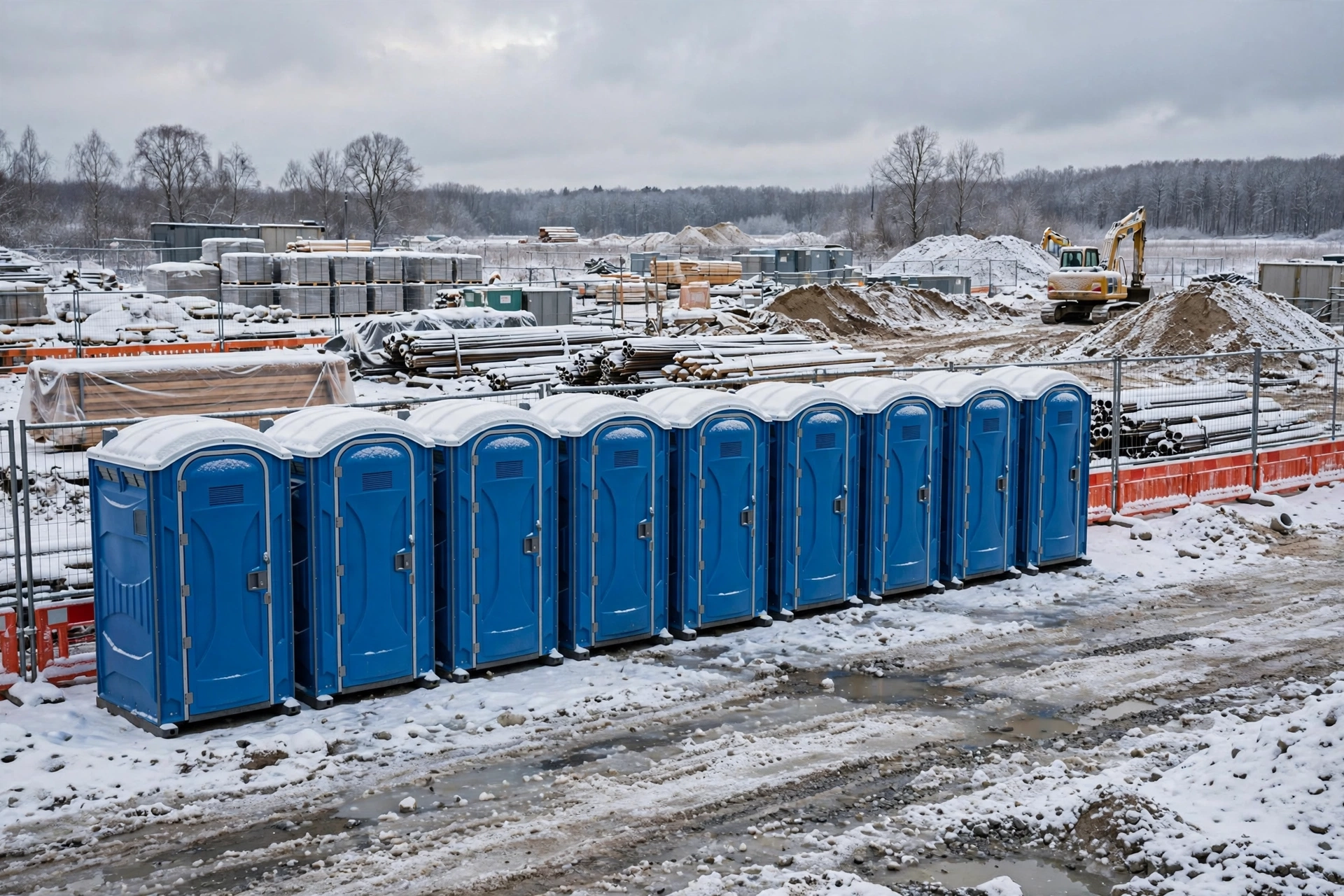
A portable toilet is a holding tank with a seat on top. Nothing about that stops working in cold weather. What changes is maintenance intensity. In summer, the enemy is heat accelerating odor and bacterial activity. In winter, the enemy is freezing: tank contents can freeze solid in sustained sub-freezing temperatures, which makes pump-outs difficult or impossible until things thaw, and puts real stress on the servicing schedule.
The adjustment is straightforward: winterize the servicing plan. That means winter-formulated deodorizing fluid that resists freezing, more frequent pump-outs so tanks never sit full through a deep freeze, and placement that gives every unit its best chance — sun exposure, wind protection, accessible service paths. Do those three things and winter rentals run fine. Skip them and you will learn exactly how hard a frozen tank is to pump. Ask for winter servicing explicitly when you book: Call (855) 343-0136 and mention cold weather up front so the service plan is built for it from day one.
What Cold Actually Does to a Portable Toilet
Know the enemy. Here is what sustained freezing temperatures do, piece by piece:
- Tank contents can freeze. Waste is mostly water, and water freezes. A full tank in a multi-day deep freeze becomes a solid block that cannot be pumped until it thaws. This is the number-one winter failure, and it is entirely preventable with frequent pump-outs.
- Deodorizer loses effectiveness. Standard deodorizing fluid is formulated for normal temperatures. In freezing weather it needs a winter formulation that keeps working in the cold — your supplier should switch chemistry for the season as a matter of routine.
- Doors and latches stiffen. Plastic contracts, hinges get stubborn, and latches that worked fine in October fight you in January. A shot of de-icer on hardware and a check during service visits keeps doors functional.
- Seats get brutally cold. No way around it: a plastic seat at twenty degrees is a shock. Users adapt, but it is the single biggest comfort complaint in winter, and it is worth addressing honestly with your crew.
- Hand sanitizer thickens. Alcohol-based sanitizer gets sluggish in extreme cold and dispensers can clog. Service visits should check and clear dispensers, not just refill them.
- Snow and ice block access. A unit buried in a snowdrift might as well not exist. Paths to units need shoveling, and drifting snow needs management all season.
Winter Servicing: The Non-Negotiable
If you take one thing from this guide, take this: winter servicing is not optional, and it is not the same as summer servicing. The core winter protocol has four parts. First, winter-formulated deodorizing fluid in every tank — chemistry designed to keep working in freezing temperatures rather than standard fluid that gives up when it gets cold. Second, more frequent pump-outs: tanks should never sit near-full going into a deep freeze, because a frozen full tank cannot be serviced until it thaws, and the unit is dead until then.
Third, hardware checks on every visit: doors, latches, hinges, dispensers, vents. Cold finds every weak point, and a latch that fails in January leaves a unit unusable. Fourth, supply checks with cold in mind — paper, sanitizer, and de-icer for hardware. A service visit that skips the hardware check is a summer visit wearing a winter coat.
Set the winter cadence when you book, not after the first freeze. Tell the supplier the rental runs through winter and ask specifically how servicing changes for the season. A supplier with real cold-weather experience will have immediate, specific answers — winter fluid, tighter pump-out rotation, hardware checks. Vague answers mean they are figuring it out on your job. Our servicing schedule guide covers standard cadences; winter tightens all of them.
Placement for Cold Weather
Winter placement follows the standard rules — level ground, service-truck access, sensible distances — plus a cold-weather layer. Sun exposure is your free heater: a unit in direct winter sun stays several degrees warmer than one in permanent shadow, which slows freezing and makes the seat marginally less punishing. When you have a choice of spots, pick the sunny one.
Wind protection is the second layer. A unit on an exposed ridge in a January wind is miserable to use and freezes faster. Tuck units behind buildings, berms, fencing, or equipment — any windbreak helps. But keep the tradeoff in mind: the windbreak cannot block the service truck. Plan the shelter and the access lane together.
Third: keep units close. In summer, a two-minute walk to the restroom is nothing. In winter, with wind chill and bulky clothing, distance becomes a real deterrent — and a crew that avoids the restroom is a crew with a morale and health problem. On winter jobsites, err on the side of closer placement and more clusters. Fourth, think about the ground: frozen ground is actually excellent for stability, but the freeze-thaw cycle turns access paths to mud. Keep paths to units graveled or matted, and keep them shoveled.
What to Tell Users to Expect
Honesty prevents complaints. Tell your crew or guests what winter portable toilet use is actually like, and the experience matches expectations instead of violating them. The seat will be cold — that is the headline, and everyone adjusts within a day or two. Some crews keep a piece of foam or a seat cover in the unit; low-tech, surprisingly effective, and worth suggesting.
Hand hygiene needs a winter plan. Alcohol sanitizer works in the cold but dispensers can clog, so service visits must check them. Where temperatures stay brutally low for weeks, consider hand-wash stations with heated enclosures or place them in sheltered spots — soap and water beats sanitizer for morale in deep winter, and crews working with concrete, solvents, or contaminants need real handwashing regardless of season.
Lighting matters more in winter because the days are short. If the crew is on site before sunrise or after sunset — which is most of winter — the path to the units and the units themselves need light. A dark, icy walk to an unlit unit is a slip-and-fall waiting to happen. Temporary lighting on the restroom path is cheap insurance.
Restroom Trailers in Winter: The Heated Option
When winter comfort actually matters — winter weddings, cold-weather corporate events, jobsite office areas — a heated restroom trailer changes the equation completely. Enclosed, insulated, with real heat, flushing porcelain, and running water, a trailer in January feels like a proper restroom instead of an endurance test. For events with guests in formal wear or elderly attendees, it is not a luxury; it is the difference between a tolerable event and a miserable one.
Trailers have their own winter requirements, and they are stricter than standard units. Water lines need freeze protection — heated and insulated, or drained and winterized between uses. The power supply must be reliable, because if the heat goes out in a deep freeze, pipes follow. Setup takes longer in winter, and the site needs the same firm, level ground plus a power source that will not quit. Book winter trailer rentals early and discuss the freeze-protection plan explicitly. See luxury restroom trailer rental for configurations, and our trailer vs portable toilet guide for the full comparison.
Jobsite Winter Sanitation: Compliance Does Not Hibernate
OSHA requirements do not pause for winter. The same Table D-1 minimums apply in January as in July, and inspectors do not accept frozen-solid units as facilities. A unit that cannot be used because the tank froze is, for compliance purposes, not a facility at all. Winter servicing is therefore a compliance activity, not just a comfort one — document it like one.
Beyond compliance, winter sanitation is a workforce issue. Cold-weather construction is already hard on crews; restrooms that are frozen, filthy, or a quarter-mile trudge through snow tell the crew exactly how much the operation values them. The contractors who keep good people through winter are the ones who sweat these details. Clean, close, serviced, lit, shoveled — that is the winter standard, and it is achievable on any site.
Storms, Snow, and the Service Plan
Winter's wildcard is not temperature — it is storms. A blizzard can bury units, block service access for days, and knock out the power running a trailer's heat. Build the storm plan into the rental. Keep the service path plowed and the areas around units shoveled; assign it to someone specifically, because everybody's job is nobody's job.
Communicate with the supplier before storms, not after. If a major storm is forecast, a pre-storm pump-out empties every tank so units start the storm with maximum capacity — cheap insurance against a multi-day service gap. After the storm, confirm the service schedule is back on track before assuming it. And keep the supplier's number where the person responsible for the site can find it: (855) 343-0136, open Mon–Sat 7am–7pm CST, Sun 7am–12pm CST.
Frequently Asked Questions
Can portable toilets be used in freezing temperatures?
Yes. Portable toilets are used through winter on jobsites and at events every year. The keys are winter-formulated deodorizing fluid, more frequent pump-outs so tanks never freeze full, and placement with sun exposure and wind protection. With a proper winter service plan, they work reliably all season.
What happens if the waste tank freezes?
A frozen tank cannot be pumped until it thaws, which takes the unit out of service for the duration. Prevention is the entire strategy: pump tanks before deep freezes, never let them sit near-full going into sustained sub-freezing weather, and schedule a pre-storm pump-out when major cold is forecast.
Do portable toilets need special chemicals in winter?
Yes — winter-formulated deodorizing fluid designed to keep working in freezing temperatures, instead of standard fluid. Any supplier with cold-weather experience switches chemistry for the season as routine. Ask for it explicitly when booking a winter rental.
Are restroom trailers better than portable toilets in winter?
For guest comfort, yes — heated, insulated trailers with flushing toilets and running water are dramatically more comfortable in cold weather. But trailers need reliable power for heat and freeze-protected water lines, plus firm level ground. For crews, well-serviced standard units placed close to the work are the practical answer.
How should I place portable toilets in winter?
Same fundamentals as always — level ground, service-truck access — plus winter layers: sunny spots over shady ones, windbreaks that do not block the service truck, closer placement since cold makes walks feel longer, and shoveled, lit paths for short winter days.
Do OSHA toilet requirements apply in winter?
Yes, fully. Table D-1 minimums apply year-round, and a frozen-solid unusable unit does not count as a facility. Winter servicing is a compliance activity — keep the schedule tight and document it.
Ready When You Are
One call handles the whole thing: unit selection, delivery scheduling, servicing cadence, and pickup. Call (855) 343-0136 — lines are open Mon–Sat 7am–7pm CST, Sun 7am–12pm CST.
More Guides
- What Affects Porta Potty Rental Cost: 7 Pricing Factors Explained
- How Many Portable Toilets Do I Need? Sizing Guide, Tables & Calculator
- OSHA Portable Toilet Requirements for Construction Sites (2026 Guide)
- Do You Need a Permit for a Porta Potty? Rules by Placement Explained
- How Often Are Porta Potties Serviced? Schedules & What's Included