Every so often a customer asks whether they should just buy portable toilets instead of renting. It is a fair question. If you need restrooms for months or years, ownership starts to look tempting — no recurring rental, no scheduling, the units are just there. And we will give you the honest answer even though we are in the rental business: for most people, renting wins decisively. But not for everyone, and not for every situation. This guide lays out both sides the way we would explain it across a table, including the costs and headaches of ownership that nobody mentions in the for-sale listings.
One ground rule for this guide: we discuss costs qualitatively, not with price tags. Purchase prices vary by unit type, condition, and market, and rental terms vary by duration and service level — any specific numbers here would be fiction within a year. What does not change is the structure of the decision: what you pay upfront, what you pay forever after, and what work you take on. That structure is what this guide covers.
The Honest Short Answer
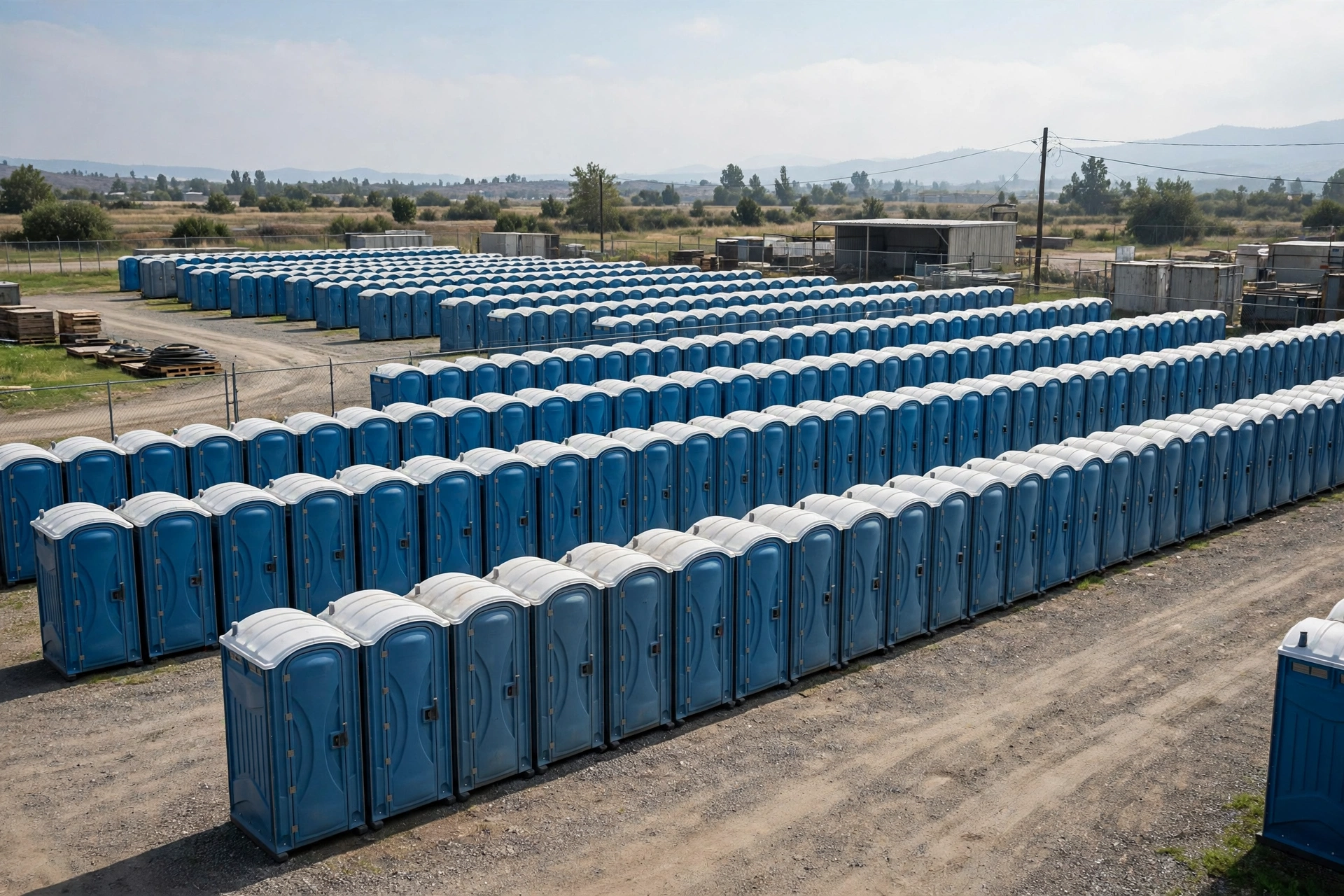
Rent if your need is temporary, variable, or event-based — which describes the vast majority of buyers asking this question. Construction projects, events, seasonal operations, emergency backup, renovations: renting gives you clean, serviced, modern units with zero ownership burden, and the rental flexes as your needs change. Buy only if you have a permanent, constant, long-term need at a fixed location — a remote facility, an ongoing operation with steady demand — and you have thought through everything below.
The reason renting wins for most people is not the monthly math. It is the total burden: maintenance, cleaning, pumping, repairs, storage, transport, and eventual replacement. Ownership transfers every one of those jobs to you. Renting keeps them with the supplier. Read the ownership section with fresh eyes before you decide the purchase price is the whole story — it is the smallest part of the story.
What Buying Actually Involves
Start with the purchase itself. A new commercial-grade portable toilet is a serious capital outlay per unit — not pocket change, real equipment money — and you do not need one unit, you need enough for your peak demand plus spares. Multiply that outlay across every unit, add delivery of your newly purchased fleet to wherever it will live, and you have spent a substantial sum before a single person uses a restroom. Used units cost less upfront and more everywhere else: older tanks, worn hardware, shorter remaining life.
Then the recurring reality begins. Owned units need everything rented units get: regular pump-outs, deodorizer, cleaning, restocking, repairs. You either do it yourself — which means owning or hiring a pump truck, handling waste disposal legally, and doing genuinely unpleasant labor on a schedule — or you hire a service company, which puts you right back to paying a service provider, except now you also own the depreciating equipment. There is no version of ownership where the units maintain themselves.
Do not forget the rest of the ownership ledger: storage space for the fleet when units are not deployed, transport to and from sites, replacement parts, eventual replacement of the units themselves as sun and use degrade the plastic, and insurance. Add it up over five years and the purchase price is often the minority of total ownership cost. Sellers quote the purchase price. Nobody quotes the rest.
The Hidden Work of Ownership
Walk through a year of owning portable toilets, and the hidden work becomes visible:
- Pumping and waste disposal. Tanks fill on a schedule whether you feel like dealing with it or not. You need a licensed hauler or your own compliant disposal arrangement — dumping waste illegally is an environmental crime with serious penalties, not a shortcut.
- Cleaning labor. Units need scrubbing, disinfecting, and restocking on the same cadence a rental company provides. Somebody does this work weekly, in all weather, or the units become unusable.
- Repairs. Doors, latches, hinges, dispensers, vents — plastic hardware in outdoor service breaks. Keep parts on hand and someone who can install them, or units sit dead.
- Transport. Every deployment and retrieval needs a truck, a trailer or flatbed, tie-downs, and someone who knows how to move the units without damaging them.
- Storage. Units not in use need secure storage out of the weather and out of sight. That is real square footage with a real cost.
- Depreciation and replacement. Sun, chemicals, and hard use age the plastic. Owned units have a finite service life, and replacement is another capital outlay down the road.
- Compliance. Waste handling, disposal documentation, and any local rules are your responsibility as the owner-operator, not the rental company's.
None of this is impossible — companies do operate their own fleets — but it is a small sanitation business you are signing up to run, on top of whatever your actual business is. Price that management time honestly when you compare.
What Renting Covers
Now the other side of the ledger. A rental from a full-service supplier includes delivery to your site, professional setup and placement, scheduled servicing for the entire rental period — pump-outs, deodorizer, wipe-downs, restocking — and final pickup. You make one phone call. Everything after that is the supplier's problem: the truck, the labor, the waste disposal compliance, the replacement of a damaged unit, the 6am emergency when a unit tips in a storm.
Renting also buys flexibility that ownership cannot match. Crew doubles mid-project? Add units with a call. Event runs an extra day? Extend. Phase wraps early? Pull units back. Need a restroom trailer for the client open house and standard units for the crew? One order, mixed fleet, no capital outlay. Ownership locks you into whatever you bought; renting adapts to whatever the job becomes. For anyone whose needs change — which is nearly everyone — that flexibility alone settles it.
And the equipment stays current. Rental fleets turn over: suppliers retire aging units and bring in new ones because their reputation depends on what shows up at your site. Owned units age in your yard, and every year they look a little more like the reason you considered renting in the first place. With long-term rental plans, even multi-month and multi-year needs get the serviced-fleet treatment without the ownership burden.
The Math That Matters (Without the Price Tags)
Forget comparing a purchase price against a monthly rental — that comparison lies by omission. The honest math is total cost of ownership against total cost of renting, over your actual timeline. Total cost of ownership means purchase plus delivery plus every year of pumping, cleaning, repairs, parts, storage, transport, insurance, and eventual replacement, plus the management time to run it all. Total cost of renting means the rental payments, period — everything else is included.
Run that comparison over one year and renting wins for almost every scenario, because the purchase has not had time to amortize and the ownership workload is fully present from day one. Run it over five years of constant, unchanging, full utilization at a single site, and ownership can pull ahead on pure dollars — while still losing on flexibility and management burden. The break-even question is therefore not just when the dollars cross, but whether your need stays constant enough, long enough, to ever reach the crossing point. For variable demand, the crossing point never arrives: you would be buying peak capacity that sits idle half the time.
There is also the utilization trap. Owned units only earn their keep when deployed. Every month a purchased unit sits in storage, it is depreciating while producing nothing — the worst of both worlds. Renting means you pay for capacity exactly when you need it and not one day longer. Unless your utilization is genuinely constant, ownership means paying for idle equipment.
When Buying Actually Makes Sense
Fair is fair — here are the situations where buying is the rational call:
- Permanent remote facilities. A mine, a ranch, a remote compound, or an off-grid operation with constant daily demand and no rental service coverage nearby. If trucks cannot reach you economically, ownership may be the only option.
- Steady multi-year demand at a fixed site. A facility with unchanging headcount and no seasonality, where utilization stays high year after year. The dollars can work here — if you also staff the maintenance.
- You are becoming the supplier. Starting a portable sanitation business, or a large contractor bringing sanitation in-house across many simultaneous projects with a dedicated crew. At that scale you are operating a fleet, not buying a toilet.
- Regulatory or logistical isolation. Situations where rental logistics genuinely cannot serve the need — extreme remoteness, specialized access, or institutional constraints.
Notice what these have in common: constant demand, long timelines, and either no rental option or the scale to run sanitation as its own operation. If your situation does not look like these, it probably looks like a rental.
When Renting Wins
- Everything temporary. Construction projects, renovations, seasonal work — defined timelines with an end date. Renting matches cost to the timeline exactly.
- Events of any kind. Weddings, festivals, tournaments, corporate gatherings. Nobody should own event sanitation equipment.
- Variable or unpredictable demand. Growing crews, phased projects, multi-site operations. Renting scales both directions with a phone call.
- Emergency and backup needs. Septic failures, disaster response, stopgaps. Speed matters, and rental fleets are built for speed.
- Any need under a few years. The shorter the timeline, the more decisively renting wins — the purchase never gets to amortize.
- When you have a business to run. Your crew builds, plans, or hosts. They do not pump tanks. Renting keeps everyone on the work that pays.
Buy vs Rent at a Glance
| Factor | Buying | Renting |
|---|---|---|
| Upfront cost | Significant capital outlay per unit, multiplied across the fleet | None — pay for the rental period only |
| Servicing labor | Yours: pumping, cleaning, restocking, on your schedule | Included: scheduled pump-outs, cleaning, restocking |
| Waste disposal | Your compliance responsibility | Handled by the supplier, licensed and documented |
| Repairs | Your parts, your labor, your downtime | Supplier swaps or repairs units |
| Storage | You need secure space for idle units | Not your problem |
| Transport | Your truck, your crew, your liability | Included delivery and pickup |
| Flexibility | Locked into what you bought | Scale up, down, or change unit types anytime |
| Equipment age | Ages in your yard | Fleet turnover keeps units current |
| Best for | Permanent, constant, remote demand | Temporary, variable, or event-based needs |
Frequently Asked Questions
Is it cheaper to buy or rent a porta potty?
For temporary, variable, or event-based needs, renting is cheaper once you count the full cost of ownership — not just the purchase price, but years of pumping, cleaning, repairs, storage, transport, and replacement. Buying can win on pure dollars only with constant, high utilization over many years at a fixed site.
How long would I need to use a purchased unit to break even?
There is no universal break-even point because it depends on utilization, service costs, and how you value your management time. The honest test: will your demand stay constant and high for years, at one location, with someone staffed to maintain the units? If any of those fail, the break-even point keeps moving away from you.
Can I service purchased portable toilets myself?
Physically yes, legally and practically it is demanding. You need a compliant way to pump and dispose of waste through licensed facilities — illegal dumping carries serious penalties — plus the equipment, protective gear, and labor for regular cleaning. Most owners end up hiring a service company, which erodes the savings that motivated the purchase.
Do rental companies sell used portable toilets?
Some do, as they retire units from fleet rotation. Used units cost less upfront but bring shorter remaining life and more maintenance. If you are set on buying, a retired fleet unit from a reputable supplier is generally a better bet than an unknown private sale — at least its service history is real.
What about long-term rentals instead of buying?
Long-term rental plans are the middle path most permanent-ish needs should take: locked-in servicing, no capital outlay, no maintenance burden, and the ability to adjust counts as needs change. For multi-month and multi-year timelines, compare long-term rental terms against ownership before committing to a purchase.
I run a large contracting operation. Should I buy a fleet?
Only if you will operate it like a business: dedicated crew, pump equipment or service contracts, storage, transport, and utilization high enough across projects to justify it. Many large contractors run the numbers and keep renting — the flexibility across simultaneous changing projects beats the theoretical savings. If you are considering it, price the management honestly.
Ready When You Are
One call handles the whole thing: unit selection, delivery scheduling, servicing cadence, and pickup. Call (855) 343-0136 — lines are open Mon–Sat 7am–7pm CST, Sun 7am–12pm CST.
More Guides
- What Affects Porta Potty Rental Cost: 7 Pricing Factors Explained
- How Many Portable Toilets Do I Need? Sizing Guide, Tables & Calculator
- OSHA Portable Toilet Requirements for Construction Sites (2026 Guide)
- Do You Need a Permit for a Porta Potty? Rules by Placement Explained
- How Often Are Porta Potties Serviced? Schedules & What's Included